Howard Berman Quotes
It is unconscionable to permit a foreign government to avoid responsibility for acts of terrorism while it benefits from U. S. commerce.
Howard Berman, U. S. Congressman (Democrat, CA), Quoted in New York Times, October 13, 1988
Sourced by: Eigen's Political and Historical Quotations


The inconsistency of the policy logic of attacking Iraq but not the other two countries of the "axis of evil" caused problems for our British allies who preferred justifying the attack on Iraq on its own merit without any linkage to Iran and North Korea. What made the Iraq invasion even more puzzling was that both Iran and North Korea were greater dangers to the United States and expressed a deep animus.


The quotation is notable as it illustrates the great difficulty that modern democracies have with extreme Islamic fundamentalists. Their very perception and world view is so different that often we think of the extremists as insane and they often feel the same way about us.


Islamic Religious Fundamentalist Terrorists in Algeria had kidnapped over 100 Western Hostages including some Americans. One of the terrorist’s “demands” was for the release of convicted murderers and terrorists in the United States. The official policy which she stated was not totally accurate. On several occasions, U. S. Officials or third parties representing them had “unofficially” negotiated with terrorists. In many cases this was a tactic to buy time and military action followed and in other cases unofficial ransoms were actually paid. The United States has had to contend with this problem with Islamic Terrorists and Pirates since the Thomas Jefferson Presidency when he argued against John Adams who wanted to pay the tribute while Jefferson preferred military action.

This is diplomatic language for a very stern warning. Pakistan supported terrorist organizations because 1) they used the terrorists as their proxies in their continuing conflict with India. The terrorists were a de facto asset of the Pakistani Intelligence Service. 2) Many Pakistani citizens were ultra-orthodox Muslims and believed in the religious objectives of the terrorists and even shared a religious belief in the propriety of the terrorist methods as long as they were being applied to non-Muslims or Muslim heretics. 3) Much of the militant infrastructure was in the tribal, frontier areas of the country where the government was relatively weak. 4) The militants had taken the position that if the Pakistan government tried to curtail their jihad efforts, then the government and its supports were heretical Muslims and were, under Sharia—Islamic Law—proper targets for their terrorism activities. The number of Pakistani Muslims that the terrorists murdered was far greater ironically than the American or European Christians and Indian Hindus that had been killed. A decade later, the Pakistani authorities were split over those who realized that the terrorists were most dangerous to the Pakistanis themselves—and especially the government officials—and those who believed that the terrorists should have continued support because of the 4 reasons above.
Azad Kashmir is that part of the disputed territory of Kashmir that was under Pakistan’s control, as opposed to the part of Kashmir that was under Indian Control.

Traditionally, countries did not allow their citizens to sue foreign sovereign governments in U. S. Courts. The main reason was one of retaliation problems ensuing. Citizens in foreign countries might then sue the United States for the damage cause by our soldiers actions such as Iraq or Afghanistan. Traditionally governments do not sue each other in civil courts. In this case, the President, Secretary of State and Defense Secretary pleaded with Congress not to pass this bill. But they passed it anyway, and President Obama veto’d it. Then the House and Senate overrode the Presidents veto on September 28, 2015 causing Schemer who led the effort for the bill in the Senate which voted almost unanimously (only 1 Senator Against)) for the override. The Democrats went against their own President on this bill.


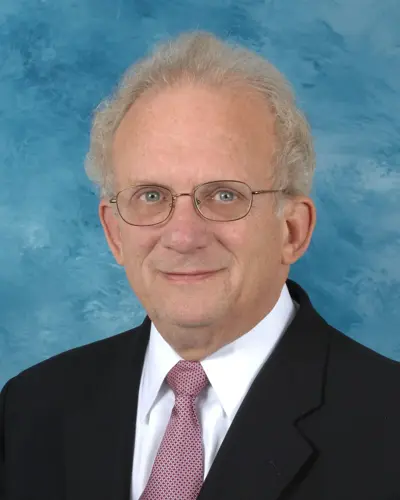
Howard Lawrence Berman is an American attorney and retired politician who served as a U.S. Representative from California from 1983 to 2013. A member of the Democratic Party, he represented the state's 26th congressional district until redistricting and 28th congressional district until losing his reelection bid—which both encompassed parts of the San Fernando Valley—for respectively ten and five terms.
