C. L. R. James Quotes
It is Toussaint's supreme merit that while he saw European civilisation as a valuable and necessary thing, and strove to lay its foundations among his people, he never had the illusion that it conferred any moral superiority. He knew French, British, and Spanish imperialists for the insatiable gangsters that they were, that there is no oath too sacred for them to break, no crime, deception, treachery, cruelty, destruction of human life and property which they would not commit against those who could not defend themselves.
James, C. L. R. The Black Jacobins: Toussaint L'Ouverture and the San Domingo Revolution. New York: Vintage Books, 1963, p. 271.


The Union was ratified by the Nobles of Scotland despite widespread public opposition. There were substantial financial incentives in the terms of the Union for the leading nobles and members of Parliament.


Barre, who had served as an officer in North American fighting with the Americans against the French, was a major opponent of the Stamp Act and other efforts to tax the American colonies. In the debate one of his opponents referred the American colonies as “planted by the care of England” and “nourished” by the mother country’s care. Barre was imprisoned in the Tower of London for a while for his vigorous defense of the American colonists.


Although Rand is one of the Conservatives' favorite writers and philosophers, only a minority would agree with her unfeeling and extreme form of a capitalistic society.


In Russia at the time, serfs were little better off than slaves. Not only did they have to obey their landlords in all things, but any who advocated disobedience on their part were beaten and sent to Siberia. Exile to the Siberian Gulags was not an invention of the Communists of the 20th century although they used that punishment in unprecedented numbers. It was used by the Czars and the Empress.


Tension was high between England and America and war was rumored. The question of whether Blacks would fight for America as they had in the Revolution and the War of 1812 arose.


The customary technique of the European Powers was to “sign treaties” with the kings of various African territories and provide them with “presents” (bribes). Often the European arms and the active assistance of European soldiers maintained the autocratic power of these leaders. In this case, the British had moved so fast that the “presents” were in a caravan that had not yet arrived.


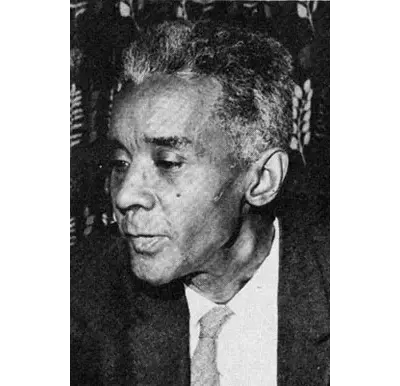
Cyril Lionel Robert James, who sometimes wrote under the pen-name J. R. Johnson, was a Trinidadian historian, journalist and Marxist. His works are influential in various theoretical, social, and historiographical contexts. His work is a staple of Marxism, and he figures as a pioneering and influential voice in postcolonial literature. A tireless political activist, James is the author of the 1937 work World Revolution outlining the history of the Communist International, which stirred debate in Trotskyist circles, and in 1938 he wrote on the Haitian Revolution, The Black Jacobins.
