Diane Wood Quotes
It is time... to end the long-standing and unproductive methodological debate over 'originalism' versus 'dynamism' or 'evolution' and focus instead on how, as a substantive matter, we should interpret the Constitution in the twenty-first century, and what it has to say on questions unimaginable to our eighteenth-century Framers.
Wood, Diane P. "Our 18th Century Constitution in the 21st Century World." New York University Law Review, vol. 80, no. 4, New York University School of Law, 2005, pp. 1079-1107.


This quotation is particularly important because it summarizes one of two opposite schools or thought regarding judicial interpretation of the Constitution that politicians have been arguing about since the Supreme Court first sat. The other is Original Intent where only the original intentions of the writers and ratifiers of the Constitution should be considered—assuming that it can be determined.


Powell was the Secretary of State and Addington kept advising the administration that as long as the President was acting in defense of the country in his capacity as Commander in Chief, he did not have to obey any existing laws that had been Constitutionally passed which in the opinion of the President restricted or limited the President or the executive branch. Addington was an attorney and Assistant to the Vice President, but he was given much responsibility for administration policy. Powell the Secretary of State of the Administration could not have disagreed more and although most politicians including Republicans disagreed with the Addington thesis, Powell was one of the few Republicans to criticize the Addington position.


Cummings was arguing against a Constitutional amendment. His alternative led to Roosevelt's court packing schema.


He uses the term, “Non-interpretivism”, in a judge’s decision to indicate a judge who does not accept the interpretation of the Constitution as written and intended by the framers. His bias is a conservative one and this is how he views decisions that he does not like. When liberals see an opinion with which they do not agree, they also very often accuse the judge of activism and not adhering to the framer’s intentions. Generally it is a question of “whose ox is gored?”

From this quotation, {615902} and {615901} it is clear that the framers of the Constitution intended the treaty making powers to be shared by the President and the Senate. In practice, in modern times treaties are usually initially negotiated by diplomats under the supervision of the President and the Senate gets to concur or not in the ratification process. However, there have been a number of treaty failures including the League of Nations where the lack of coordination has resulted in a situation where the Senate had to accept or reject something which the President had negotiated and the Senate rejected the treaty.

The president was asked if he supported the Supreme court's school desegregation decision:


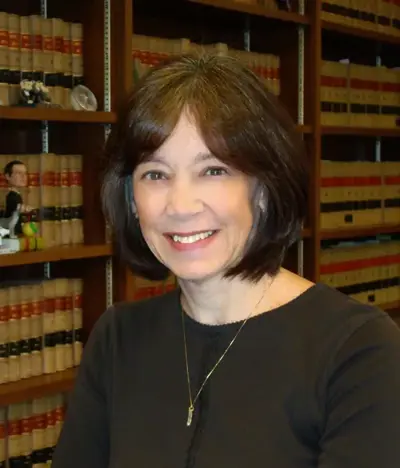
Diane Pamela Wood is an American attorney and jurist who serves as a United States Circuit Judge of the United States Court of Appeals for the Seventh Circuit, and a senior lecturer at the University of Chicago Law School.
