Leonard Constant Lambert Quotes
It is only comparatively primitive machinery that affords a stimulus, and there is already a faint period touch about Pacific 231 and Le Pas d'Acier. One feels...that Prokofieff should have written ballets about the spinning jenny and the Luddite riots; that Honegger should have been there to celebrate the opening of the Stockton and Darlington Railway and the death of Huskisson with a "Symphonie Triomphale et Funèbre".
Lambert, Constant. Music Ho! A Study of Music in Decline. Faber & Faber, 1934.


Chekov was distancing himself from the views of many of the Russian religious leaders and writers like Tolstoy who saw salvation and reform coming from religious virtue. Chekov was prescient enough to see the potential of technology in improving the human condition. Russia was then technologically backward and religion was one of the leading forces blocking technological development, education, and reform. This was one of the reasons that the Russian Revolutionaries were hostile to religion which had not only supported the Czar and the aristocracy but also kept modernism and technology out of Russian life. The situation was not unlike the role of Islamic leaders in Muslim countries one hundred years later.


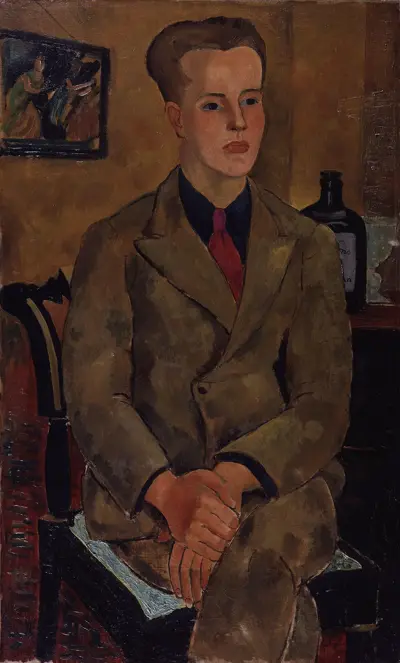
Leonard Constant Lambert was a British composer, conductor, and author. He was the Founder Music Director of the Royal Ballet, and (alongside Ninette de Valois and Frederick Ashton) he was a major figure in the establishment of the English ballet as a significant artistic movement. His ballet commitments, including extensive conducting work throughout his life, restricted his compositional activities. However one work, The Rio Grande, for chorus, orchestra and piano soloist, achieved widespread popularity in the 1920s, and is still regularly performed today. His other work includes a jazz influenced Piano Concerto (1931), major ballet scores such as Horoscope (1937) and a full-scale choral masque Summer's Last Will and Testament (1936) that some consider his masterpiece. Lambert had wide-ranging interests beyond music, as can be seen from his critical study Music Ho! (1934), which places music in the context of the other arts. His friends included John Maynard Keynes, Anthony Powell and the Sitwells.
