John Randolph Quotes
It is my duty to leave nothing undone that I may lawfully do, to pull down this administration....
When the Republican leadership in 2008 stated that the Republican’s primary objective was to prevent the re-election of Barack Obama, it was not the first time that American politicians admitted that their major objective was to cripple an administration. This quotation shows a very early example. See {592642} for Adams view of Senator Randolph.
John Randolph, 1773-1833, U. S. Congressman & U. S. Senator (Democratic Republican, VA), U. S. Minister to Russia, Senate Speech Against John Quincy Adams, 1828
Sourced by: Eigen's Political and Historical Quotations

Referring to Senator John Randolph of Roanoke: See {631458} for an example of the kind of attack to which Adams reacted.

Holland was then controlled by a monarch and an aristocracy. He and his nephew were major figures in a revolution several years later.


Debs had unconstitutionally been arrested and jailed for opposing American entry into World War I. He was later pardoned by President Warren G. Harding.


The right wing hatred of President Obama hit a low point in 2012, when a very wealthy Republican zealot could make a statement like this and not get repudiated by the Republican party leaders. Rarely before in modern times had a President been accused of not acting like an American by a responsible politician or political leader. The irony is that the American voters totally repudiated Forbes, and selected Obama for President, Senator and other posts, and despite Forbes’ attacks was recognized by most people as a great American. Forbes, in contrast, one of the wealthiest men in America could not get elected to any public position thought he ran several times.

A trochar was a medical instrument commonly used with cattle when they would become very bloated with gas. The farmer would insert the trochar into the the animal and all the gas would come out with a loud noise. The insult was understood by farmers, ranchers, and rural folk but went over the heads of must city people and journalists.

Dean had lived through the horrors of the Nixon Administration, so this was a very serious accusation from a Republican no less. By the end of the George W. Bush presidency, there were many Republicans who had repudiated Bush.

His admonition did little good. That Congress passed fewer bills than any other in history.


The leaders and their members were organizing Civil Rights protests and demonstrations in keys Southern communities. The Southern segregationists commonly referred to the protesters with these three terms. Hoover hated the Civil Rights organizations and many of their leaders and would not allow FBI agents to assure the safety of the demonstrators when they were beaten and brutalized by the Southern law enforcement officers and KKK members—often one and the same as Hoover knew ({637608}). He used the same terms describing the demonstrators as the Southerners did reflecting his biases and sympathies.

Europe and the United States have many such people who argue for regime change. Many in America even argue for violent regime change but they are protected by the First Amendment. Many foreign leaders do no believe thet his can possibley be true.


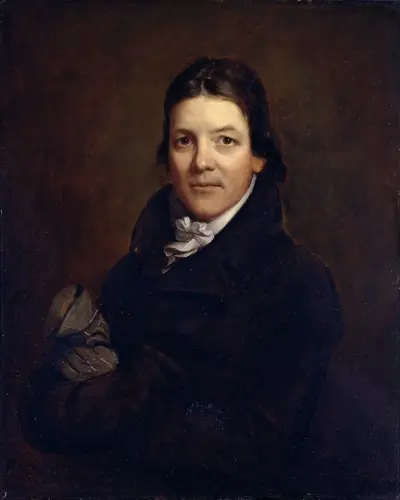
- Born: June 2, 1773
- Died: May 24, 1833
- Nationality: American
- Profession: Planter
John Randolph, commonly known as John Randolph of Roanoke, was an American planter, and a politician from Virginia, serving in the House of Representatives at various times between 1799 and 1833, and the Senate from 1825 to 1827. He was also Minister to Russia under Andrew Jackson in 1830. After serving as President Thomas Jefferson's spokesman in the House, he broke with the president in 1805 as a result of what he saw as the dilution of traditional Jeffersonian principles as well as perceived mistreatment during the impeachment of Samuel Chase, in which Randolph served as chief prosecutor. Following this split, Randolph proclaimed himself the leader of the "Old Republicans" or "Tertium Quids", a wing of the Democratic-Republican Party who wanted to restrict the role of the federal government. Specifically, Randolph promoted the Principles of '98, which said that individual states could judge the constitutionality of central government laws and decrees, and could refuse to enforce laws deemed unconstitutional.
