George F. Will Quotes
It is important that Miers not be confirmed unless, in her 61st year, she suddenly and unexpectedly is found to have hitherto undisclosed interests and talents pertinent to the court's role. Otherwise the sound principle of substantial deference to a president's choice of judicial nominees will dissolve into a rationalization for senatorial abdication of the duty to hold presidents to some standards of seriousness that will prevent them from reducing the Supreme Court to a private plaything useful for fulfilling whims on behalf of friends.
Will, George F. "Can This Nomination Be Justified?" The Washington Post, 5 Oct. 2005, p. A23.


From time to time, the assessment of a prospective Supreme Court justice has depended on an attempt to move the court in a particular direction or to prevent that. This is as opposed to the issue of the competence of the nominee. In most cases, such nominees may not have been the best qualified but they have been extremely competent. In a few cases, such as that of Justice Clarence Thomas, the justice was mediocre and inexperienced at best, but his virtues were his race and his total ideological consistency. Most attorneys can predict his vote in advance. He has never asked a question in oral arguments. See {623452} .


This was FDR’s plan to “pack” the Supreme Court as it was the older justices who were voting against him. Many justices have been very productive even into their 80s. Although Roosevelt was arguably the most popular president in history and was elected for 4 terms, he was rebuffed on this attempt to alter the system of checks and balances.


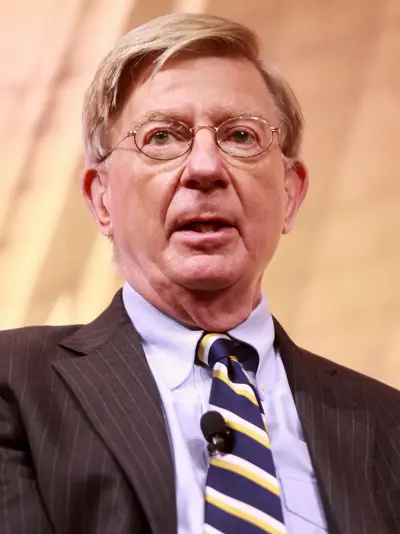
George Frederick Will is an American libertarian-conservative political commentator and author. He writes regular columns for The Washington Post and provides commentary for NBC News and MSNBC. In 1986, The Wall Street Journal called him "perhaps the most powerful journalist in America," in a league with Walter Lippmann (1889–1974). He won the Pulitzer Prize for Commentary in 1977.
