Noah Webster Quotes
It is alleged by men of loose principles , or defective views of the subject, that religion and morality are not necessary or important qualifications for political station. When a citizen gives his vote to a man of immorality , he abuses his civic responsibilty. He sacrifices not only his own interest but that of his neighbor, and he betrays the interest of his country.
Webster, Noah. Letters to a Young Gentleman Commencing His Education. S. Converse, 1823, p. 18.

Moses urged them not to accept a compromise what would give them the majority of everything that they were demanding but not all. See {637624} for Rustin’s’ argument to accept the compromise.

Viscount Morley of Blackburn. Morley's paraphrase was of a quotation of Rousseau 19 years earlier.


This is a very important quotation. No one likes to make moral compromises, but Mann realized that there was a necessity in a complex society—especially a republic to make compromises. Politics cannot function without compromises of all kinds moral and otherwise as different people have different views of morality and rectitude. Mann observed that if compromises must be made, it is better for the politicians to make them than the educators, physicians, clerics, and other professional groups. Therefore politics takes the heat so that the other institutions of society do not have to. Thus politics has this crucial role among its others according to Mann.


_0_PostageStamp_47x47.jpg "Chairman of the Joint Chiefs of Staff Navy Adm. Mike Mullen gives an interview to John Dickerson during the CBS news program Face the Nation in Washington, D.C., July 5, 2009. During the interview, Mullen discussed the wars in Iraq and Afghanistan, North Korea's recent missile tests and his recent visit to Russia. (DoD photo by Mass Communication Specialist 1st Class Chad J. McNeeley, U.S. Navy/Released)")

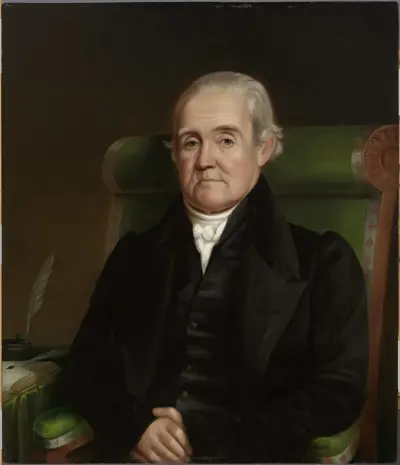
Noah Webster Jr. was an American lexicographer, textbook pioneer, English-language spelling reformer, political writer, editor, and author. He has been called the "Father of American Scholarship and Education". His "Blue-backed Speller" books taught five generations of American children how to spell and read. Webster's name has become synonymous with "dictionary" in the United States, especially the modern Merriam-Webster dictionary that was first published in 1828 as An American Dictionary of the English Language.
