Learned Hand Quotes
… it [is] a judge's duty to decide, not to debate.
Learned Hand, 1872-1961, U. S. Supreme Court Justice, Mr. Justice Cardozo, 1939
Sourced by: Eigen's Political and Historical Quotations


Judges are restrained by the law and precedence (stare decisis), as well as having to uphold what he/she thinks are undesirable laws or find against laws he thinks are good. He must decide on the law and the facts of the particular case. And if he is an appellate or a Supreme Court judge he must make compromises to accommodate other justices hearing the case along with him/her.


This was the most eloquent acknowledgement of the import and difficult job of the Federal Disctrict Judges--the backbone of the Federal Judiciary who are oftetn over looked in favor of the appellate judges and Supreme Court judges who deal with cases as a group and always have the privelege of reviewing and second guessing the work of the district judges who first had to decide the issue on way or the other.


In most of the world this is an accepted truism. However, where there is judicial independence as in the United States, Israel, Norway, England and other countries, those who appoint judges have little or no control over a judiciary that has lifetime tenure and a tradition of non-interference. The influence is limited to the appointment of a judge with a particular philosophy. However, in some countries, not only do the courts follow the lead of the government but if they do not the judges themselves might be jailed or worse. Borelli’s principle therefore holds there.

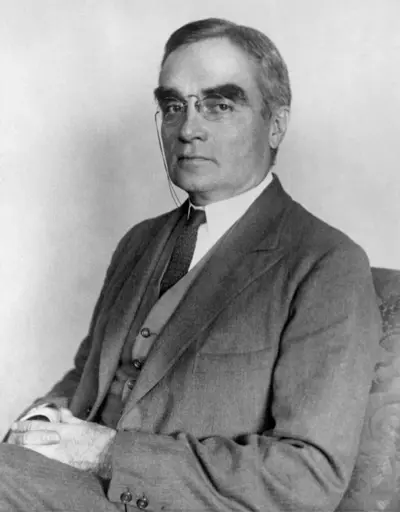
Billings Learned Hand was an American judge and judicial philosopher. He served on the United States District Court for the Southern District of New York and later the United States Court of Appeals for the Second Circuit. As of 2004 Hand had been quoted more often by legal scholars and by the Supreme Court of the United States than any other lower-court judge.
