Fidel Castro Quotes
It is a fundamental principle of criminal law that an imputed offense must correspond exactly to the type of crime described by law. If no law applies exactly to the point in question, then there is no offense.
Castro, Fidel. History Will Absolve Me. Editorial de Ciencias Sociales, 1973.


This quotation is a great example of the difficulty of deciding some of the major Constitutional issues. Most reasonable people believe that Rehnquist certainly has a point. On the other hand, critics observe that this quotation essentially says that it is OK to convict an innocent person if it cost too much or be too much trouble to do so. Reasonable people would also agree that this objection has much merit also. So the judicial system is stuck with deciding when the cost or trouble is too much. There will never, can never, be a clear cut answer.


The conspirators in the assassination of Abraham Lincoln were tried, found guilty, sentenced and hanged by a military tribunal. Not everyone agreed that such a process was lawful or desirable. Bates believed also that the effect was to make martyrs of the conspirators.


This constitution was written 7 years before the national constitutional convention. It shows that there was concern about the separation of powers in United States even before the Constitution was drafted. See {616749} for an even clearer statement of the separation of powers principle. The national legislatures in Europe had commonly declared people traitors and in many cases incarcerated or executed them. This clause, effectively presaged the national constitution of 1787 where the Congress was prohibited from trying people for treason or anything else except impearchment.


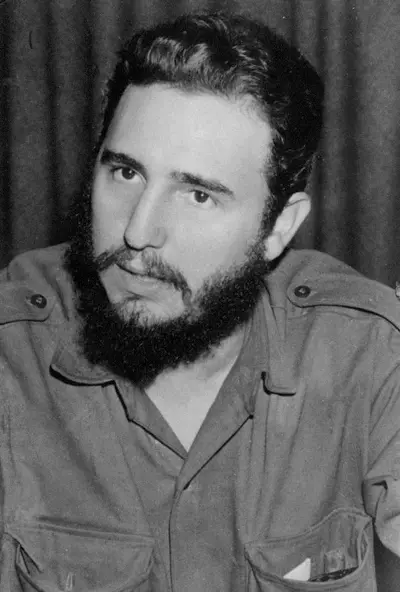
Fidel Alejandro Castro Ruz better known internationally as Fidel Castro, was a Cuban revolutionary and politician who served as Prime Minister of Cuba from 1959 to 1976 and President from 1976 to 2008. Ideologically a Marxist–Leninist and Cuban nationalist, he also served as the First Secretary of the Communist Party of Cuba from 1961 until 2011. Under his administration, Cuba became a one-party communist state; industry and business were nationalized, and state socialist reforms were implemented throughout society.
