Bartolome de las Casas Quotes
Island of Hispaniola once so populous (having a population that I estimated to be more than three million), has now a population of barely two hundred persons.
Casas, Bartolomé de las. A Short Account of the Destruction of the Indies. Translated by Nigel Griffin, Penguin Books, 1992, p. 11.


One of the worst problems facing Russia in the wake of the collapse of the Soviet Union was the health care system. There was not yet a private sector to replace the Communist system and the health care system broke down and the lifespan of the average Russian actually went down significantly during that period. As an example, there was no way to purchase and import pharmaceuticals nor distribute the ones that were available.


The United States policies at the time encouraged tens of thousands of foreigners to study in America—especially mathematics, science and engineering. Then after they graduate we expel them despite the fact that we have a great labor shortage of these technical skill areas. The result is that the American economy lags in one of its most important areas, high technology for lack of qualified people to fill the jobs. Larger American companies then set up operations overseas and hire many of the people who we kicked out, so they do not pay any taxes to America. The best and most ambitious of these American trained foreigners, then start their own businesses abroad, create many jobs that never benefit Americans and then sell to America competing with American firms. New York City alone had tens of thousands of open jobs at very high salaries for which there were no Americans to fill while the New York schools had trained enough foreigners to fill the jobs, but our national policies forced the best and the brightest to leave and compete with us.


From a phone interview conducted by the article author.


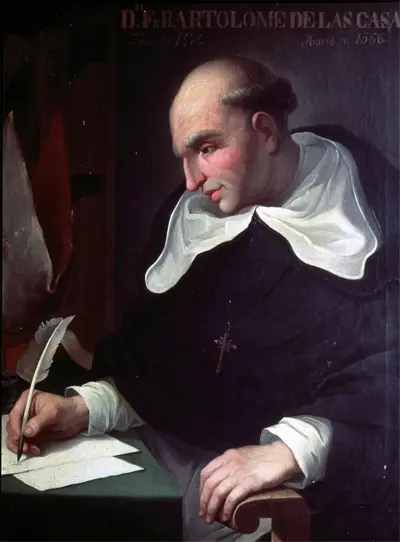
Bartolomé de las Casas was a 16th-century Spanish landowner, friar, priest, and bishop, famed as a historian and social reformer. He arrived in Hispaniola as a layman then became a Dominican friar and priest. He was appointed as the first resident Bishop of Chiapas, and the first officially appointed "Protector of the Indians". His extensive writings, the most famous being A Short Account of the Destruction of the Indies and Historia de Las Indias, chronicle the first decades of colonization of the West Indies. He described the atrocities committed by the colonizers against the indigenous peoples.
