Stephen Schwartz Quotes
Islam does have two faces—a bright face and an evil face, and we must work with the former. The reaction of Moslems against Islamic extremism doesn’t get the coverage it should.
Stephen Schwartz, Journalist and Historian, C-SPAN, Book TV, November 2, 2002&&
Sourced by: Eigen's Political and Historical Quotations


Over a century ago, modern Islamists were critical of the Wahhabi sect for their extremism. Unfortunately, the Saudi Arabian royal family whose absolute control of the kingdom could be threatened by an extremist religious movement, cut a deal with the Wahhabi that not only gave them control over all religious and legal interpretations of Sharia in the kingdom, but also gave them large amounts of money with which the Wahhabi expanded and exported their extremist brand of Islam to many other counties—including the United States. A large part of the Islamic terrorism of the end of the 20th century into the 21st was caused by fanatics who had been exposed to Wahhabi schools (madrassas), mosques or materials which are virulently anti-Christian and ant-Semitic. Muslim intellectuals like Muhammad Abduh had warned about extremism in general and Wahhabi extremism in particular.


Son of Reverend Billy Graham. While parts of the Koran do preach violence, parts of the Old Testament also do, as do parts of the New Testament such as the Book of Revelations.

This statement of the Prophet is often quoted by Yusuf al-Qaradawi and other moderate, modernist Islamic clerics and leaders urging people to eschew terrorism and Muslim fundamentalist extremism.
The reason he claimed that Governor Taseer was a blasphemer was that the governor opposed death penalty for saying or writing anything that was heresy or blasphemy as interpreted be fundamentalist Muslims. The Governor knew he was taking a risk. See {620970} .
Duran has been the subject of major criticism and attack by many who regard the term as too prejudicial and inflammatory, that there is an automatic association in the term of all Islam and Fascism. While Duran’s position is that the term only applies to extremists who embrace values and actions that were consonant with Fascism, there are other Islamic critics who believe that basic Islam is Fascistic per se and the term should be applied to almost everything Islamic.
Some think that origination credit should go to Malise Ruthven who used the word in an article published in The Independent of September 8, 1990


Slogans taken from posters listing 10 people targeted by Muslim extremists. Most were people who had said or published material that some fundamentalist Muslims had decided were offensive to Islam. One was Charlie Hebdo, the French Publisher who Islamic terrorists murdered later. Note the Americanisms that the terrorist propagandists adopted. The Wanted Dead or Alive was taken from the posters of the American West of the 19th century. The "Yes we can" was lifted from the Barack Obama 2008 campaign slogan. The "Bullet A Day Keeps the Infidel Away" is a takeoff on the American saying "An apple a day keeps the Doctor away." One of the reasons for these Americanisms was that the founding editor was Samir Khan, self-described American traitor.
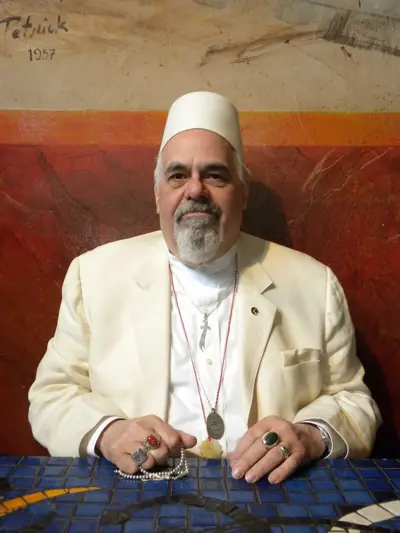
Stephen Suleyman Schwartz is an American Sufi journalist, columnist, and author. He has been published in a variety of media, including The Wall Street Journal. He is the founder and executive director of the Washington, D.C.-based Center for Islamic Pluralism. In 2011–2012 he was a member of Folks Magazine's Editorial Board.
