Ayn Rand Quotes
Individualism regards man-every man-as an independent, sovereign entity who possesses an inalienable right to his own life, a right derived from his nature as a rational being.
Rand, Ayn. The Ayn Rand Lexicon: Objectivism from A to Z. Edited by Harry Binswanger, New American Library, 1986.


Most politicians and philosophers would argue that liberty is both an individual right and a group right. However there are money who do not recognize group rights and feel that they are inimical to individual rights.

Political opponents of FDR claimed the New Deal programs would destroy individualism. That was one of the likely outcomes of the Great Depression had the New Deal programs not worked to improve the economy and bring relief to the millions of unemployed, starving and destitute people who would likely have turned to Fascism as did Italy and Germany. Roosevelt and his staff used this phrase often.

He was a poor governor in general and was fired and replaced by the Dutch East India Company which was a happy occurrence for the colonists. The company was a money making institution and depended on colonists who would farm, trade and manufacture. If they were unhappy, the company would not profit. They would not have minded a tyrant if he could produce profits as some did in the Dutch East Indies, but Kieft was a loser on all counts.


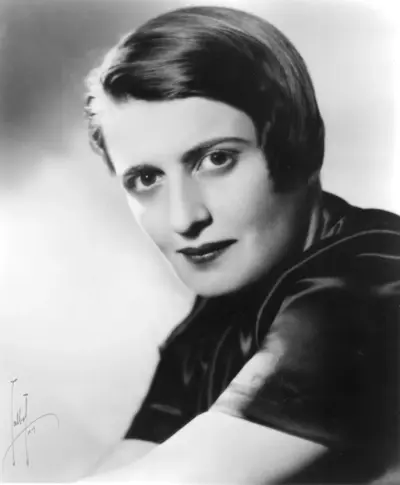
Ayn Rand was a Russian-American writer and philosopher. She is known for her two best-selling novels, The Fountainhead and Atlas Shrugged, and for developing a philosophical system she named Objectivism. Born and educated in Russia, she moved to the United States in 1926. She had a play produced on Broadway in 1935 and 1936. After two early novels that were initially unsuccessful, she achieved fame with her 1943 novel, The Fountainhead. In 1957, Rand published her best-known work, the novel Atlas Shrugged. Afterward, she turned to non-fiction to promote her philosophy, publishing her own periodicals and releasing several collections of essays until her death in 1982.
