Keshub Chunder Sen Quotes
India’s great curse is caste; but English education has already proved a tremendous power in leveled the injurious distinctions of caste
Keshub Chunder Sen, 1838-1888, Indian religious and social reformer, Speech, London, April 12, 1870
Sourced by: Eigen's Political and Historical Quotations

The traditional Hindu social structure established castes – levels of society with Brahmins at the top and untouchables at the bottom. When India gained independence, the caste system was made illegal. Nonetheless, it is still followed by hundreds of millions of Indians. Religiously the Buddhists and the Hindus have had different philosophies. Ilaiah is a Buddhist who opposes the traditional Brahmin social structure and is a supporter of “Dalitization” – a change in the Indian culture to make the Dalits (untouchables) equal de juro and de facto.


The “company actially administered the Government of Great Britain in India.


He was writing about America and many of the industrial democracies who at the time, as a result of globalziation, technology, government action and inaction, and other factors, had gone through a 30 year period of increasing disparities.

Paz was the Ambassador to India. The caste system in India was outlawed by the Indian Constitution, and the government has made many effort at affirmative action to eliminate it put as Paz observed it is so ingrained in Indian tradition, culture and religion that it continues to persist.
Paz was the Ambassador to India

Many Indians follow a rigid caste system where all people are born and divided into 5 social castes which are immutable—there is no caste mobility. An “untouchable” –the lowest Indian Caste—even if he make a million dollars—is still an untouchable and the higher casts would have nothing to do with him. Most upper caste people would not allow an untouchable physician to treat him or an untouchable cook to prepare his food. The Caste system is illegal under Indian law, but the majority of the Indians still follow it.


This famous line actually had a predecessor. See {624357} for an over 60 year eariier expression of the notion. It is not known for certain if Orwell was aware of the earlier use.


The Caste System has been legally abolished in India yet hundreds of million Indians still follow it.

Most pressure for political correctness comes from the center or the left. On this area however, pressure to avoid speaking of this comes from left and right. The left is concerned that by discussing the reality the poorer performing subgroups will be stigmatized and public behavior will make the situation worse. The right would prefer that there is little or no political dialogue regarding the huge differences in outcome in America where individual ability and effort seems to play such a large part of the differential. I addition, they see the making of these distinctions as the beginning of class warfare.
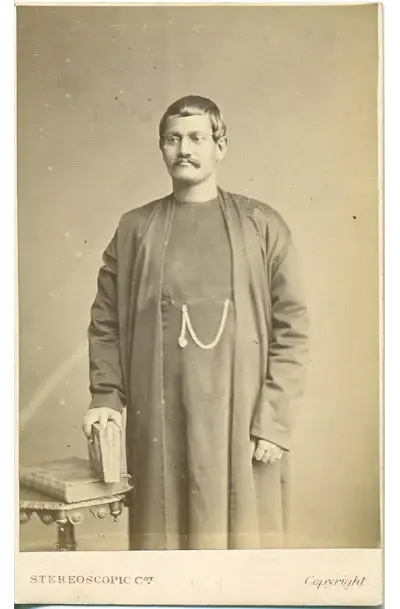
Keshub Chandra Sen was a Hindu philosopher and social reformer who attempted to incorporate Christian theology within the framework of Hindu thought. Born a Hindu in the Bengal Presidency of British India, he became a member of the Brahmo Samaj in 1857 but established his own breakaway "Bharatvarshiya Brahmo Samaj" in 1866 while the Brahmo Samaj remained under the leadership of Debendranath Tagore (who headed the Brahmo Samaj till his death in 1905). In 1878 his followers abandoned him after the underage child marriage of his daughter which exposed his campaign against child marriage as hollow. Later in his life he came under the influence of Ramakrishna and founded a syncretic "New Dispensation" inspired by Christianity, and Vaishnav bhakti, and Hindu practices.
