Henry A. Kissinger Quotes
India survived through the centuries by combining cultural imperviousness with extraordinary psychological skill.
Henry A. Kissinger, U.S. Secretary of State (Republican), U.S. National Security Advisor, Does America Need a Foreign Policy, 2001
Sourced by: Eigen's Political and Historical Quotations


India was soon to be granted Independence by the Labor Government, much to the chagrin of Winston Churchill and other Conservative politicians who wanted to diminish the British Empire as little as possible. Jinnah, not wanting the majority Muslim areas of India to be part of a Hindu majority India, came up with this clever alternative. Britain would grant independence only to the Hindu parts of India and the remainder—Pakistan—would remain in the Empire as an autonomous colony. Many of the British politicians believed that that would be a constant friction in the Empire as many of the "Pakistanis" would then want their own independence and use the terror tactics to fight for it. Besides, the Conservatives did not have enough votes to stop Independence to all of India. Jinnah's efforts however were enough to lengthen the debate in the British Parliament thereby delaying independence for all of India and angering the pro-independence leaders throughout India. Jinnah, by then an autocrat, did this in secret, behind the backs of his own Muslim colleagues, many of whom had Independence as their highest priority.

Even into the 21st century, the problem was not solved and Muslims from Pakistan continue their futile but tragic terrorist tactics to try and acquire more territory from India." 1st Earl Mountbatten of Burma


This mode of national definition is characteristic of many nations of Europe as well.


At the partition if India into Hindu and Muslim States, what is now Bangladesh, was a part of Pakistan called “East Pakistan” by the Pakistani government. While India became a thriving democracy, Pakistan with its combination of military strongmen and Islamic Fundamentalists did not fare as well and became a very corrupt, undemocratic military nation. East Pakistan was not contiguous with the rest of Pakistan and was culturally quite different and less religiously fundamentalist. While all Pakistanis suffered from poor government, the East Pakistanis fared worse. Finally, they developed their own identity which was suppressed by the military dictators of Pakistan and the Banglas revolted and Bangladesh became and independent nation.

Arguments against the Partition of India at the time centered around the poor economic viability of a separate Muslim state. However Iqbal and others placed the cultural issues in the forefront. They eventually prevailed.


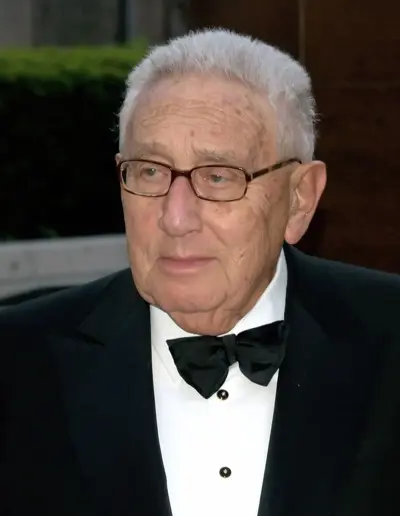
Henry Alfred Kissinger KCMG is an American politician, diplomat, and geopolitical consultant who served as United States Secretary of State and National Security Advisor under the presidential administrations of Richard Nixon and Gerald Ford. A Jewish refugee who fled Nazi Germany with his family in 1938, he became National Security Advisor in 1969 and U.S. Secretary of State in 1973. For his actions negotiating a ceasefire in Vietnam, Kissinger received the 1973 Nobel Peace Prize under controversial circumstances, with two members of the committee resigning in protest.
