Yukio Mishima Quotes
In the pale light of daybreak the gravestones looked like so many white sails of boats anchored in a busy harbor. They were sails that would never again be filled with wind, sails that, too long unused and heavily drooping, had been turned into stone just as they were. The boats' anchors had been thrust so deeply into the dark earth that they could never again be raised.
Mishima, Yukio. The Sound of Waves. Translated by Meredith Weatherby, Alfred A. Knopf, 1956.


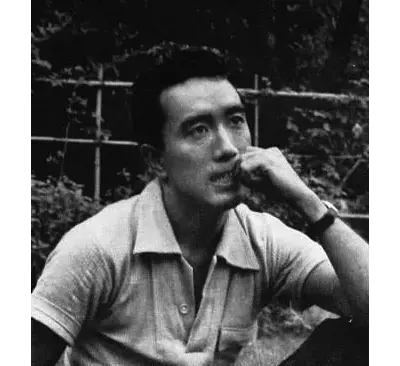
Yukio Mishima, born Kimitake Hiraoka (平岡 公威, Hiraoka Kimitake) was a Japanese author, poet, playwright, actor, model, Shintoist, nationalist, and founder of the Tatenokai (楯の会, "Shield Society"), an unarmed civilian militia. Mishima is considered one of the most important Japanese authors of the 20th century. He was considered for the Nobel Prize in Literature in 1968, but the award went to his countryman and benefactor Yasunari Kawabata. His works include the novels Confessions of a Mask (仮面の告白, Kamen no kokuhaku) and The Temple of the Golden Pavilion (金閣寺, Kinkaku-ji), and the autobiographical essay "Sun and Steel" (太陽と鉄, Taiyō to tetsu). Mishima's work is characterized by "its luxurious vocabulary and decadent metaphors, its fusion of traditional Japanese and modern Western literary styles, and its obsessive assertions of the unity of beauty, eroticism and death".
