Chen-Ning Yang Quotes
In the latter half of the last century the impact of the expanding influence of Western culture and economic system brought about in China a severe conflict.
Yang, Chen-Ning. "Banquet Speech." Nobel Prize Banquet, 10 Dec. 1957, City Hall, Stockholm. Les Prix Nobel en 1957, Nobel Foundation, 1958.


“Young Chinese” referred to members of a Chinese political party—Young China—consisting mainly of Western-Educated young Chinese who were a strong force for change, but did not have the experience, money, or power connections to unify the country or operate the government. The Japanese watched Chinese politics very carefully as China was seen as a potential rival or a teritory of conquest.

This quotation is an amazing prediction that was 100 years in the future. China had a mercantile culture and tradition that was suppressed and controlled by the Emperors, the Europeans, the Nationalist Chinese, the Japanese, and finally the Communists who finally found a way to provide commercial freedom if not political, religious, and cultural liberty. But the talent for commerce was clear even 100 years ago to those who were broadminded enough to see it behind the antl-Asian prejudice of the 19th and early 20th century.

What makes this quote significant is the data—the end of the 19th century and here was an author, in a prestigious journal, warning about the potential economic competition from China which at the time was seen by most as a backward, primitive civilization which could never compete with the West. Also, Hearn was the first writer who communicated information about Asia to Americans on a large scale.


10 centuries ago was a time when the Arabs were far more advanced and modern than other cultures including the Christian West that was in the Dark Ages. However, in the 12th century there was a “closing”—a narrowing of allowable Islamic thinking, and since then, Islamic people have had great difficulty with change or modernity. Not all Muslim nations are equally rigid but the Arabs are at the extreme among Islamic counties.


In China, the religious activities of the Missionaries never really lead to the many troubles between the missionaries and the Chinese. It was their activities in the non-religious arenas articulated here by Denby.


He was very sensitive to the criticism of China’s human rights record. The Chinese leadership was very proud to their accomplishments of lifting hundreds of millions of people out of poverty and eliminating hunger and starvation, and many foreigners from developed nations were seemingly inattentive to the remarkable economic success in their focus on human rights shortcomings.

Pandita Indrani Rampersad. She is the first Hindu woman who ever became a pundit—a religious expert who guides Hindus. She is also a professor in the United States.


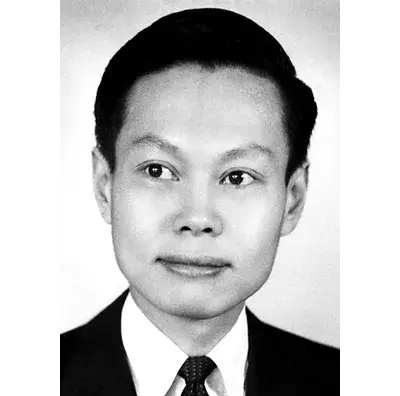
Yang Chen-Ning or Chen-Ning Yang (born 1 October, 1922), also known as C. N. Yang or by the English name Frank Yang, is a Chinese theoretical physicist who made significant contributions to statistical mechanics, integrable systems, gauge theory, and both particle physics and condensed matter physics. He and Tsung-Dao Lee received the 1957 Nobel Prize in Physics for their work on parity nonconservation of weak interaction. The two proposed that one of the basic quantum-mechanics laws, the conservation of parity, is violated in the so-called weak nuclear reactions, those nuclear processes that result in the emission of beta or alpha particles. Yang is also well known for his collaboration with Robert Mills in developing non-Abelian gauge theory, widely known as the Yang–Mills theory.
