John Quincy Adams Quotes
In the American hemisphere the cause of freedom and independence has continued to prevail, and if signalized by none of those splendid triumphs which had crowned with glory some of the preceding years it has only been from the banishment of all external force against which the struggle had been maintained. The shout of victory has been superseded by the expulsion of the enemy over whom it could have been achieved.
Adams, John Quincy. "First Annual Message." 6 Dec. 1825. A Compilation of the Messages and Papers of the Presidents, edited by James D. Richardson, Vol. 2, Bureau of National Literature, 1897, p. 865.


This is commemorated by the Cinco de Mayo Mexican holiday celebration.

Islamic terrorists took over one of the major cities of Mali, a former French colony, and controlled the immediate area imposing Sharia (Islamic Law). The Mali government and military tried to prevent the takeover, but the military was too weak. The French President, with the support of the Mali government, immediately dispatched French special troops to Mali. They quickly defeated and ousted the terrorists before they could attract more Islamic jihadist fighters and before they could incite Muslims in other areas to try and take over to install Sharia.


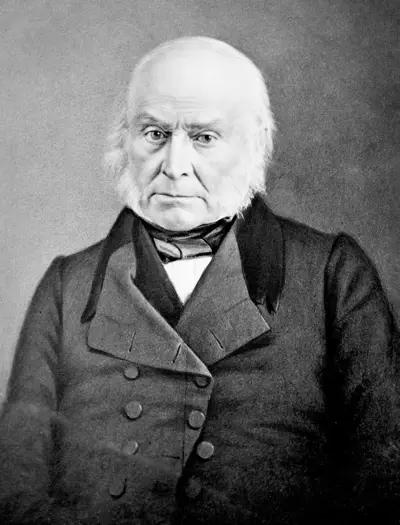
John Quincy Adams was an American statesman, diplomat, lawyer, and diarist who served as the sixth president of the United States, from 1825 to 1829. He previously served as the eighth United States Secretary of State from 1817 to 1825. During his long diplomatic and political career, Adams also served as an ambassador, and as a member of the United States Senate and House of Representatives representing Massachusetts. He was the eldest son of John Adams, who served as the second U.S. president from 1797 to 1801, and First Lady Abigail Adams. Initially a Federalist like his father, he won election to the presidency as a member of the Democratic-Republican Party, and in the mid-1830s became affiliated with the Whig Party.
