Robert Southey Quotes
In size and population Manchester is the second city in the United Kingdom, containing above four-score thousand inhabitants. Imagine this multitude crowded together in narrow streets, the houses all built of brick and blackened with smoke; frequent buildings among them as large as convents ... where you hear from within ... the everlasting din of machinery; and where, when the bell rings, it is to call wretches to their work instead of to their prayers…. if Dante had peopled one of his hells with children, here was a scene worthy to have supplied him with new images of torment
Robert Southey, 1774-1843, English Poet & Writer, Letters From England, 1808
Sourced by: Eigen's Political and Historical Quotations


He called attention to the relationship between the poverty living conditions, sanitation, and the outbreak of cholera in the Manchester Cholera epidemic of 1832. He went on to advocate shorter working hours, better sanitation, and education for the mill workers.

One steam engine, pulling a large plow by cables and manned by 5 or 6 workers could do the work of 20 horse drawn plows each requiring 1 worker. In addition all the workers who were needed to maintain the horses and clean up after them were also no longer required.

She was writing about the textile mills of Manchester, England in the Industrial Revolution. Workers’ wages were so low that many of them could not feed themselves and their family decently

See {621891} for a similar view.


The coal miners’ strike had been going for 5 months. The major issue was the right to union recognition. The mine owners refused to do that and decided to take the strike. President Theodore Roosevelt mediated a settlement where the miners won more money but no union recognition. The great appeal and significance of this speech is that it stressed the young children who started working in the mines at ages 8 or 9 by working on the “breakers” where they broke up large chunks of coal into smaller chunks. The children never saw daylight and never had a chance for education much less a childhood. At the time, and well into the 20th century the Republican Party was adamantly opposed to any legislation regulating child labor and when two decades later public opinion finally forced Congress to pass Child Labor legislation, the Supreme Court declared it unconstitutional and it took a Constitutional Amendment. See {32240}, {642469}, and {36885}.


Jefferson was one of the first political and economic thinkers to express concern over the “wage slave” concept of the industrial revolution. This was one of the major reasons that he was not in consonance with Alexander Hamilton in his economic vision for America. While we followed the Hamilton direction, there are still issues of maintaining freedom and independence for an employee in modern nations and economies.

3rd Earl Russell of Kingston

The authors were physicians of the city health department. The violence to which the report referred were the Civil War Draft Riots. These were so bad that the Federal Troops returning from the Battle of Gettysburg were ordered to restore order. This was one of the first official notices of the relationships between poverty, overcrowded and unsanitary living conditions and crime.


Howard was one of the first people to recognize the migration from the country to the cities brought about by the Industrial Revolution and then suggest solutions. He advocated planned suburban communities that had some elements of the country, but allowed a density of people to function in an industrial economy. He called them “Garden Cities”. Forest Hills in New York and other American planned communities were much influenced by his thinking as were many other new communities since.


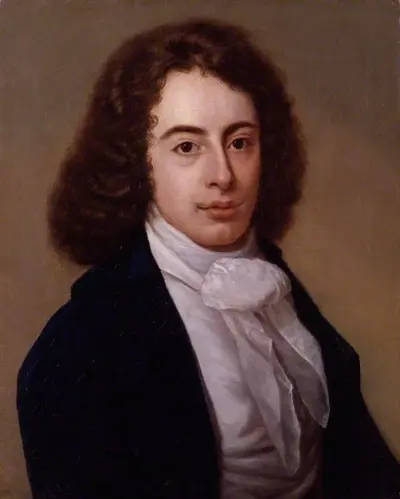
Robert Southey was an English poet of the Romantic school, and Poet laureate from 1813 until his death. Like the other Lake Poets, William Wordsworth and Samuel Taylor Coleridge, Southey had begun as a radical, but became steadily more conservative, as he acquired respect for Britain and its institutions. Other romantics, notably Byron, accused him of siding with the establishment for money and status. He is principally remembered as author of the poem After Blenheim and the original version of Goldilocks and the Three Bears.
