Bruno Schulz Quotes
In our town there was a Gestapo officer who loved to play chess. After the occupation began, he found out that my father was the chess master of the region, and so he had him to his house every night.


This was not the ravings of a right wing extremist. It was normative for Prussia as a whole. Right wing extremism as we think of it today was the norm of the ruling classes in Prussia and other parts of Germany. This book was a best seller in Germany. This quotation illustrates the mentality of the conservative, militarist, culture that dominated Germany at the time. The German aggression of WWI was not even considered as immoral but a God-given right.

The Nazis occupied the cities, but the partisans survived in the mountains. The resistance was ferocious and very effective. From a German Soldier’s point of view, the Yugoslav front was the most dangerous assignment where his odds of being killed was even greater than the Russian front.


The man who was “the best war photographer in the world” but was a refugee from Hungary in New York. The Government actually prohibited him from having a camera and would not give him a visa to go to Europe to cover the War. Finally the government relented from its absurd concept of security and Capa became the leading photographer of the American Army effort in Europe and shot the greatest photos of the D-Day landing. Incredibly, in the McCarthy era, his passport was rescinded by the State Department because he had photographed the Spanish Civil War and was wrongly thought a communist. After legal action he got his passport back and covered Vietnam. While with front-line American troops he was blown up by a mine, the first American journalist killed in the Vietnam war. And the man who the State Department thought disloyal in three wars, was given a military funeral in Vietnam and his family was offered burial in Arlington National Cemetery reserved for American military.


The description is of the Mexican conquest of Arizona and the Indian revolt. See {612107}
As a result of the programs and philosophy he expounded, Leontiev joyously predicted:
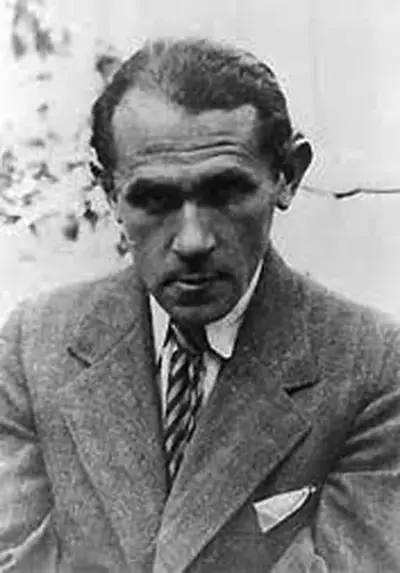
Bruno Schulz was a Polish Jewish writer, fine artist, literary critic and art teacher. He is regarded as one of the great Polish-language prose stylists of the 20th century. In 1938, he was awarded the Polish Academy of Literature's prestigious Golden Laurel award. Several of Schulz's works were lost in the Holocaust, including short stories from the early 1940s and his final, unfinished novel The Messiah. Schulz was shot and killed by a German Nazi, a Gestapo officer, in 1942 while walking back home toward Drohobycz Ghetto with a loaf of bread.
