Tertullian Quotes
In our case, murder being once for all forbidden, we may not destroy even the foetus in the womb, while as yet the human being derives blood from other parts of the body for its sustenance. To hinder a birth is merely a speedier mankilling; nor does it matter whether you take away a life that is born, or destroy one that is coming to the birth. That is a man which is going to be one; you have the fruit already in the seed.
Tertullian. Apology. The Ante-Nicene Fathers, Vol. 3, edited by Alexander Roberts and James Donaldson, Christian Literature Publishing Company, 1885, p. 25.


When a couple sought assistance from a fertility clinic, the best medical procedure to fertilize a few female egg cells with sperm. After a few days of development, the seemingly best embryo is selected for implantation in the mother. The others are usually frozen so that they can be used later if there is a miscarriage or the baby dies in childbirth. The Senator and a few other religious fundamentalists believe that the fertilized cell clusters are actually human beings. Therefore if there is a successful birth, the remaining ones should not be used for research using the embryonic stem cells. On the other hand, many are often discarded as most people do not see the cell clusters as a human being but as a potential human being just as a pile of bricks and a truck of cement is not a house but is a potential house if things are done properly.


This was the traditional Jewish view of abortion and infanticide. It is the view of the Orthodox Jews of today, but the larger body of Reform Jews, like many Protestant sects, do not equate abortion to murder or infanticide.
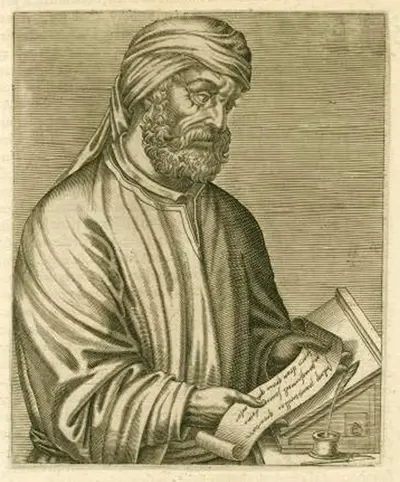
Tertullian (/tərˈtʌliən/; Latin: Quintus Septimius Florens Tertullianus; c. 155 – c. AD 220) was a prolific early Christian author from Carthage in the Roman province of Africa. Of Berber origin, he was the first Christian author to produce an extensive corpus of Latin Christian literature. He was an early Christian apologist and a polemicist against heresy, including contemporary Christian Gnosticism. Tertullian has been called "the father of Latin Christianity" and "the founder of Western theology."
