Yasser Arafat Quotes
In order to obtain the goal of returning to Palestine, all of us sometimes have to grit our teeth. But it is forbidden that this harm the continued struggle against the Zionist enemy. Cooperation and understanding between the P.L.O. and the rejectionist organizations is what will lead to the speedy retreat of Israel from the occupied territories in the first stage, until the establishment of a Palestinian state with its capital in Jerusalem. Only a state like that can then continue the struggle to remove the enemy from all Palestinian lands.
Arafat, Yasser. Quoted in Arafat's War: The Man and His Battle for Israeli Conquest by Efraim Karsh, Grove Press, 2003.


Lydda was a town in what is now Israel. In 1949 when the UN ordered the partition of the region into two states—one Jewish, the surrounding Arab nations all sent their armies to attack the nascent Israel and prevent it from ever forming a state. Incredibly, not only did the Jewish settlers beat back 14 attacking armies with civilians and volunteer militia, but organized their state very rapidly. The UN mandate gave citizenship in Israel to the people (including the Arabs) who lived in the partitioned territory of Israel. The invading armies broadcast messages through the airwaves and the imams asking the Arabs to leave the territory and go behind the Arab military lines so that they would not be injured when the Arabs used their artillery and tanks in their invasion. The Arab politicians also promised the Israeli Arabs that after the invasion, they could have the property of the Jews who would be pushed into the sea and banished. Many did; many did not preferring to stay in Israel for many reasons including the fact that the Jews promised a full citizenship in a democracy. The Israelis warned that if Arab natives left and joined the Arab invaders, they would not be allowed back as there would be no way to differentiate them from enemies. They and their progeny became the so called “refugees”. However in one Biblical town, Lydda (Lod) things were different. There were 17,000 Arabs and no Jews. There had been a small traditional population of Jews there but in 1921 there were anti-Jewish riots and Jews were either killed or forced out. Attempts of Jewish families to move back into their land over the years were met by Arab violence and ethnic cleansing. In 1949, Israeli militia and civilians took over Lydda, and despite the official Jewish policy against it, went on their own retaliatory version of ethnic cleansing and drove most of the Arabs out to the Arab lines outside of the partitioned areas. They were never allowed to return despite the fact that they had been forced out with several injured and killed. Israeli public opinion is divided as to the proper moral posture with respect to the families from Lydda. Shavitt and those with his view are in a large minority. Most Israelis feel that the 1921 expulsion of the Jews, and the more recent expulsion of all Jews from Egypt and other Arab countries, justifies the status quo. Some, have blotted out the Jewish immoral 1949 ethnic cleansing and some young Israelis believe the accusation of Jewish improper behavior in Lydda is just another of the many Arab lies about the Israelis. The issue is a moral dilemma for both peoples.

”Palestine” to the Arabs of the area meant the territory of the West Bank, Gaza, and Israel itself. They wanted to expel the Jews and or take over the whole area as a single state—Palestine—with an Arab majority. With the Israeli Defense Forces successes under Dayan, this notion of Palestine was “finished”. The notion of a Palestinian State which included the West Bank and Gaza but not Israel was then negotiated and these negotiations were ongoing for years. Minorities of Arabs and Israelis did not want to see a any Palestinian state that did not include Israel proper, and they blocked it whenever they could.
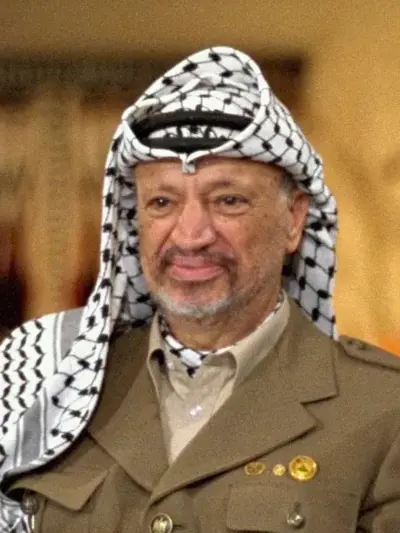
Mohammed Yasser Abdel Rahman Abdel Raouf Arafat al-Qudwa al-Husseini, popularly known as Yasser Arafat (Arabic: ياسر عرفات, romanized: Yāsir ʿArafāt) or by his kunya Abu Ammar (Arabic: أبو عمار, romanized: ʾAbū ʿAmmār), was a Palestinian political leader. He was Chairman of the Palestine Liberation Organization (PLO) from 1969 to 2004 and President of the Palestinian National Authority (PNA) from 1994 to 2004. Ideologically an Arab nationalist, he was a founding member of the Fatah political party, which he led from 1959 until 2004.
