Tom Fitton Quotes
In my experience in Washington, when people refuse to come clean, it is usually because they are hiding dirty laundry.
Fitton, Tom. Clean House: Exposing Our Government's Secrets and Lies. Threshold Editions, 2016.

Every military establishment has secrets that they should maintain and are not always forthcoming with facts d explanations. However, the Pentagon is so large with so many layers that there are subgroups and vested interests, prevaricate and lie, even to their own superiors. No one knows how prevalent this is, but there have be a number of major incidents where the were lies and cover-ups—usually to prevent public embarrassment to some element of the military industrial complex.


The then CIA Director, Allen Dulles, fostered a practice of “adjusting” intelligence reports to support ideological policies and theories that were then in vogue. The agents in the field knew what was wanted and many adjusted their reports to coincide with the overall intelligence and policy. The station chiefs and other supervisors often ignored reports of their agents that they knew were not exactly accurate. Copeland however, just fabricated reports and “information” from sources. The honesty and integrity of the CIA intelligence operations have varied from time to time and depended much on the CIA Director at the time. Allen Dulles, though brilliant and able, fostered an ideological intelligence agency. He even went so far as to lie to the President on several occasions.

TEPCO was the Japanese Corporation that operated the Fukushima Nuclear Power Plant that so badly hurt Japan. The company was not candid and forthcoming during the disaster and in the aftermath. The governor would not allow TEPCO to restart other reactor in his province until they adopted a new policy of candor and truthfulness.


Allan Dulles was a long time Director of the CIA.
Gelb was referring to the Cuban Missile Crisis in 1963. The Russians had installed ICBMs in Cuba and more were coming by sea. WWIII could have started with a misstep by the United States or the Soviet Union. President rejected the advice of some hawks to attack and/or invade Cuba and be ready to attack Russia with nuclear weapons. Instead, he authorized a naval blockade of all ships and planes going in or out of Cuba. There were some negotiations with the Russians, and in a few days, the Russians dismantled and removed the missiles from Cuba and we lifted the naval blockade. The perception was that Kennedy faced down the Russians who capitulated when faced with firmness and force. Actually, Kennedy gave the Russians much more. He agreed to remove the American ICBM Jupiter missiles from Turkey. But if that were known in America, the right wing would criticize Kennedy mercilessly for appeasing and capitulation to the Russians. The Russians agreed to keep it secret, and the Executive Branch classified it top secret and kept the entire deal from the public. 50 years later, Gelb, one of the few people in the government then who knew the entire deal, wrote this article pointing out that there was a serious danger to what we did to make that deal a secret. Many hawks took the Cuban Missile Crisis as proof that the Russians would back down when faced with a fait accompli and would not retaliate. They then formulated much American foreign and military policy on the assumption that the Russians will capitulate when faced with our tough unilateral terms. The reality of course was just the opposite. The Russians would only agree to a peaceful solution if we withdrew all our missiles that were threatening them and end the naval blockade of Cuba. The Russians got us to remove our missiles for the relatively cheap price of removing from Cuba just a few missiles that they had just installed. Kennedy looked like the strong hero who stood up to the Russians while in reality, he and our military and state department lost a diplomatic contest of sorts. Kennedy apologists argue that because America had developed longer range ICBMs, the Jupiter Missiles in Turkey were not that important, and Kennedy really gave up nothing of value. The Kennedy team clearly didn’t want to argue that point in a public debate, and chose secrecy where the enemy clearly knew the whole story, but our allies, our civilians, our politicians and even most of our military were in the dark.
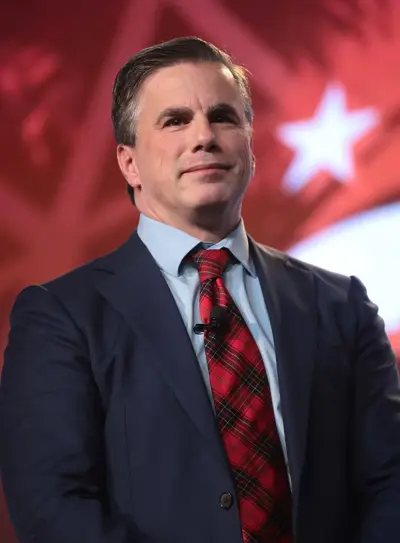
Thomas J. Fitton is an American conservative activist and the president of Judicial Watch. Fitton is known for pro-Trump commentary. Fitton is prominent for criticizing Special Counsel Robert Mueller's investigation into Russian interference in the 2016 United States presidential election; he has said that the investigation was a "coup" against U.S. President Donald Trump and called for it to be shut down.
