Emily Greene Balch Quotes
In listing these tendencies making for a new world, we must not forget developments in the religious or spiritual thinking and feeling of mankind, where also we feel a strong unifying trend.
Balch, Emily Greene. "Toward Human Unity or Beyond Nationalism." Nobel Lectures, Peace 1926-1950, edited by Frederick W. Haberman, Elsevier Publishing Company, 1972, pp. 335-346.


The people of the Book refers to Jews and Muslims. This passage of the Koran is used to justify ecumenism with Muslims integrated with Jews and Christians. The Koran consists of Muhammed’s sayings, and he himself had opinions about Jews and Christians that differed from time to time. So although this passage signals a tolerant religion, in other places Muhammed preached violence against the people of the Book. At first Muhammed and his followers expected to see the people of the Book adopt Islam as their religion. When they did not, relations deteriorated somewhat.

What is interesting about this quotation is that there were many at the time who thought that different people in different parts of the world and cultures were of different species. Science at that point did not even realize that all humans had a common ancestor. It makes the quotation all the more interesting.

This is an interesting quotation as it shows that there were opponents of literal interpretation of the Bible in the 17th century, and that they were among the leading men of the day. The argument that the Bible has divine inspiration but was written by men and should not be taken literally, has been made since the Ancient Jews received the Bible.


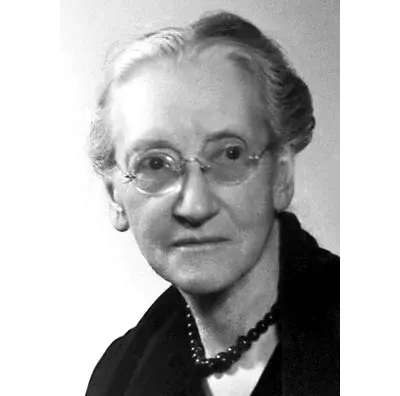
Emily Greene Balch was an American economist, sociologist and pacifist. Balch combined an academic career at Wellesley College with a long-standing interest in social issues such as poverty, child labor, and immigration, as well as settlement work to uplift poor immigrants and reduce juvenile delinquency.
