Empress Dowager Cixi Quotes
In foreign countries, the ruled feel connected with the ruling. This is why they are so formidable.
This is a remarkable quotation. Cixi attributed the great success of the Western nations and their power to their democracy, This was a time that many in England and Europe were still struggling with the degree that democracy was desirable and even in America there were many who thought American success was in spite of democracy, not because of it. Ironically, this view was rejected after Cixi by the rulers of China who concluded that heavy central rule was required to keep China stable, Sun Yat Sen and Chiang Kai Chek gave lip service to the desirability of long range democracy but maintained dictatorial rule and in Chiang’s case a very cruel and corrupt dictatorship as well. When Mao and his Communists ousted Chiang, the too rejected political democracy, and a century after this Chinese Empress pointed the way, China had still not “connected the ruled with the ruling”.
Cixi, 1835–1908, Empress Dowager of China, 1905
Sourced by: Eigen's Political and Historical Quotations


China, after overthrowing the Manchu Dynasty was struggling among many factions for control of the government. Many of the potential leaders were corrupt.
Husayn Ali Nuri. His enthusiastic support of democratic reforms was taken as an attack upon the Ottoman Empire, the Czar and upon all autocratic rulers in general.

Many of the early democracies had failed when in crises the citizens turned to a strong leader who soon became a monarch. The early democracies did not have the mature democratic institutions that we now know are so important for the success of a democracy.


A major problem of new and emerging democracies is that many people believe that majority rule per se is democracy. In Egypt for example, Morsi and his Muslim Brotherhood won the election. They then assumed that they had the right to do anything including exempting the government from judicial review or deciding the role of women in society or denying freedom of religion to non-Muslim citizens. Democracy is not a serial autocracy with each new autocrat being selected by a free and fair election.
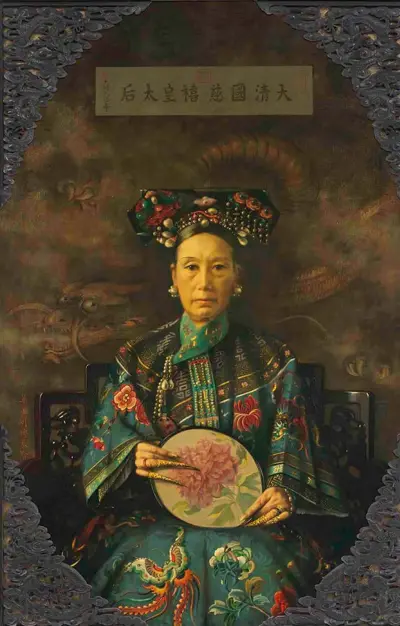
Empress Dowager Cixi was a Chinese empress dowager and regent who was the de facto supreme ruler of China in the late Qing dynasty for 47 years, from 1861 until her death in 1908. Of the Manchu Yehe Nara clan, she was elected as a concubine of the Xianfeng Emperor in her adolescence and gave birth to a son, Zaichun, in 1856. After the Xianfeng Emperor's death in 1861, the young boy became the Tongzhi Emperor, and she became the Empress Dowager. Cixi ousted a group of regents appointed by the late emperor and assumed regency, which she shared with Empress Dowager Ci'an. Cixi then consolidated control over the dynasty when she installed her nephew as the Guangxu Emperor at the death of the Tongzhi Emperor in 1875, contrary to the traditional rules of succession of the Qing dynasty that had ruled China since 1644.
