Marcus Tullius Cicero Quotes
In doubtful cases the more liberal interpretation must always be preferred.


The New Deal liberal Democrats had complained that the Supreme Court was making national policy and law and not interpreting law. They tried to pack the Supreme Court by adding more justices who would be more sympathetic to the New Deal. (See {587549}.) At the beginning of the 21st century it was the conservative Republicans who were making the same claim that the Supreme Court was making law and not interpreting it. The pattern seems to be when the court votes for your side, they are interpreting the law. When they vote for the other side, they are activist—making law improperly.


Referring to the Brown v. Board of Education, the Topeka, KS, Supreme Court school desegregation decision:


Cummings was arguing against a Constitutional amendment. His alternative led to Roosevelt's court packing schema.


This was more than a general observation at the time. Elena Kagan had just gone through difficult and extended Senate confirmation hearings to be a Justice of the Supreme Court. She was confirmed but there was a substantial Conservative opposition to her on the grounds that she had not served as a judge, although she had appeared as an attorney in many cases and as Solicitor General of the United States she argued cases before the Supreme Court. To many it was surprising that a sitting justice would so currently take a public position which could be interpreted as criticizing one wing of Congress, especially since that wing had been criticized for just playing petty politics and having no real substantive issues.
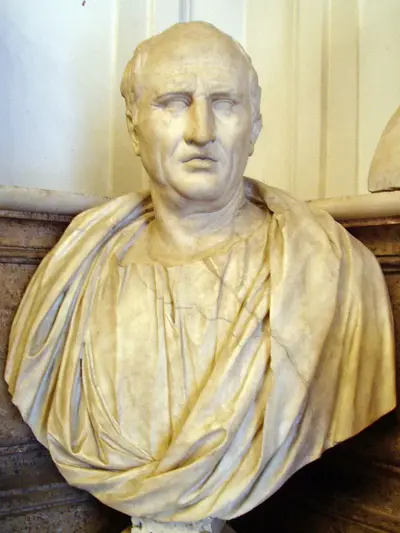
Marcus Tullius Cicero was a Roman statesman, orator, lawyer and philosopher, who served as consul in the year 63 BC. He came from a wealthy municipal family of the Roman equestrian order, and is considered one of Rome's greatest orators and prose stylists.
