Blake Farenthold Quotes
In cutting government, we cut a huge variety of programs, a lot of which I would have liked to see increase, and a lot of which I'd like to see decreased more.
Farenthold, Blake. Town Hall Meeting. 2012.


In the non-defense side of the budget a very large proportion of the budget is for entitlements like Social Security and Mediacre which are obligations that must be paid. The remainder, the smaller part is everything else--funding the cabinet departments, all the medical and sdcientific research, all the federal aid to public dchools and police departments, all the welfare, foodstamp and other programs for the poor, the costs of the Federal COurt System, the White House, the Congress, the State Department, foreign aid, Homeland security, weatehr forcasting, all the agricultural programs, and viirtually everything the governmetn does. In 2017 President Donals Trump submitted a budget to COngress that increased defense spending by a fulll 10 percent, and gave a hugh tax cut for the wealthy and the corporations. To balance the budget, he propsoed eliminateing man of the existing progrms like "Meals on Wheels" which brings at least 1 hot meal a day to homebound poor eldertly people, and a host of other critical programs. He had no previous experience with a government budget which was thoudands of times larger and more complex than any budget he had ever seen. So many in Congress, in both partiesd, were very critical of the budget and Congress then started to create its own buget. This quote expressed the heart of the problem.


In 1775 England had amassed a large national debt and was looking to the American colonies as one source of revenue for debt reduction.


This quotation pithily summarizes a common problem in politics of describing budgets. In most years there has been a national inflation. If a new budget is, in actual dollars, the same as the previous years or a little more, but the increase is less than the inflation level, the agency will not be able to provide the same level of services as the previous year. Therefore services will be cut and those who are politically in favor of more money for the program legitimately describe this as a “budget cut”. Opponents of larger funding increases, also legitimately describe the funding as a “budget increase”. One side refers to what the money can buy and the other, to the absolute dollars spent. This is an example of the classical ambiguity of political oratory.


Goldwater was the first Republican Presidential Candidate since the end of WWII who had campaigned for smaller government and reduced government spending. He actually started the modern Republican trend toward campaigning on this theme. Ronald Reagan did a much better job of campaigning on this theme, and all Republican Candidates since have campaigned on these two themes. It is not clear whether the Republicans were actually serious about this or just ran on the themes to please the political wing that Goldwater had started or meant it but were not good enough at running the government to fulfill this promise. Every Republican President from Reagan through George W. Bush increased the government spending and increased the number of government employees—more so than most Democrats ironically. Democratic President Bill Clinton was the only post WWII president to cut spending, produce a surplus and diminish the size of the government bureaucracy. Goldwater was so intellectually honest that had he won, he probably would have done everything he could to implement the policy of smaller government and less spending.


1st Viscount Snowden


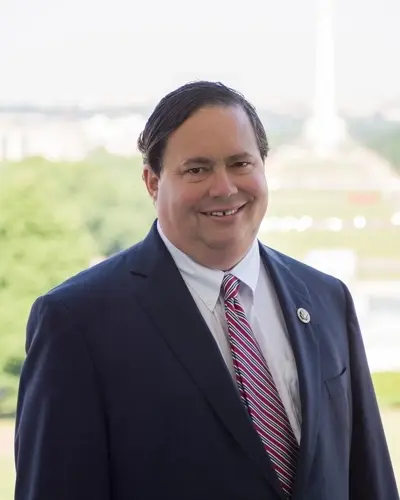
Randolph Blake Farenthold is an American politician and lobbyist. A member of the Republican Party, Farenthold co-hosted a conservative talk-radio program before beginning a career in politics. Farenthold served as the U.S. Representative for Texas's 27th congressional district from 2011 until his resignation in April 2018 in the wake of reports he used public funds to settle a sexual harassment lawsuit and had created an intensely hostile work environment for women in his congressional office. Upon resigning, Farenthold pledged to reimburse the US$84,000 in public money that he used to settle the lawsuit, then reneged his pledge to repay in May 2018.
