Morrison R. Waite Quotes
In countries where the common law prevails, it has been customary from time immemorial for the legislature to declare what shall be a reasonable compensation under such circumstances, or perhaps more properly speaking, to fix a maximum beyond which any charge made would be unreasonable.
Morrison R. Waite, 1816–1888, U. S. Supreme Court Justice, Munn v. Illinois, 1877
Sourced by: Eigen's Political and Historical Quotations


On the Fugitive Slave Act: As one of the leading American Catholic intellectuals during the 19th Century, Brownson’s opinions went far in keeping Catholics from joining the side of the abolitionists. However, just a few years later his tone would change and he would become one of the few Catholic writers to refuse to defend slavery, see {610710}. While the majority of Catholics refused to join the abolition movement, they often did so because abolitionism was closely tied to anti-Catholicism, see Gordon {611392} or Shaftesbury {611106}. Other reasons included Irish immigrants fearful of competition from Black labor and the fear of liberal individualism and social disorder, which was prevalent in 19th century Catholic thought. For a further explanation on the relationship between American Catholics and slavery, see McGreevy {612036}.

This constitution was written 7 years before the national constitutional convention. It shows that there was concern about the separation of powers in United States even before the Constitution was drafted. See {616749} for an even clearer statement of the separation of powers principle. The national legislatures in Europe had commonly declared people traitors and in many cases incarcerated or executed them. This clause, effectively presaged the national constitution of 1787 where the Congress was prohibited from trying people for treason or anything else except impearchment.


Marshall did not crate this concept or some its phraseology out of whole cloth. See Rufus King {610245} for a Constitutional Convention basis for the statement.
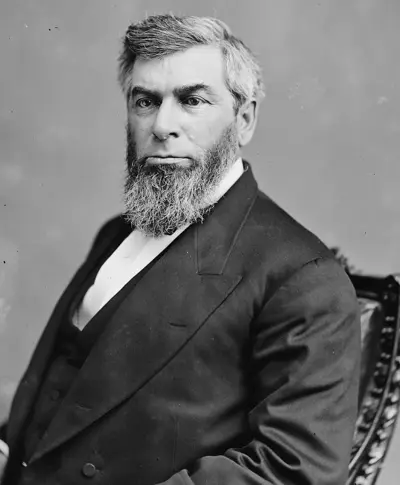
Morrison Remick "Mott" Waite was an attorney, judge, and politician from Ohio. He served as the seventh Chief Justice of the United States from 1874 to his death in 1888. During his tenure, the Waite Court took a narrow interpretation of federal authority related to laws and amendments that were passed during the Reconstruction Era to expand the rights of freedmen and protect them from attacks by vigilante groups such as the Ku Klux Klan.
