Abdulmecid I Quotes
In consequence, and as the zeal and sagacity by which thou art characterized, as likewise the experience and knowledge which thou hast acquired in the affairs of Egypt during the long space of time that thou hast held the post of Governor of Egypt, give reason to believe that thou hast acquired a title to the favour and to the confidence which I may grant to thee, that is to say, that thou wilt be sensible of their full extent, and all the gratitude which thou shouldst have for them, that thou wilt apply thyself to cause these feelings to descend to thy sons and thy nephews, I grant unto thee the Government of Egypt within its ancient boundaries, such as they are to be found in the map which is sent unto thee by my Grand Vizier now in office, … together with the additional privilege of hereditary succession
This is an amazing quotation in the sense that it shows the absolute manner in which the Ottoman Turkish Empire ruled the Islamic World in the Middle East and North Africa. The Sultan and Caliph had absolute rule over both the civil and religious areas of the Islamic world. In this decree, the Caliph actually gave an entire nation to his loyal servant, Muhammad Ali, who had acted as Governor of Egypt for the Sultan. Muhammad Ali was neither a Turk or an Egyptian. He was an Albanian, racially and ethnically totally different from the nation that became his. From then on, Muhammad Ali’s children would inherit the Egyptian throne. And they did and his dynasty lasted until the revolution in 1923. The Ottoman Empire was far more controlling and arbitrary than the British Empire and lasted much longer as the Ottoman Caliph controlled the Islamic religion as well as the civil nations.
Abdulmecid I, 1823–1861, 31st Sultan of the Ottoman Empire & Caliph of Islam, Appointment of Muhammad Ali as Ruler of Egypt and the Sudan, 1840
Sourced by: Eigen's Political and Historical Quotations

Khomeini was a politician as well as a cleric. He was not always consistent depending on his audience. This book was the publication of 17 different speeches with different audiences. Here he opposes all monarchy, but there is little doubt that his main target was the monarchy of Saudi Arabia. In {620335} he suggests that monarchy would be acceptable if the monarch followed Islamic law. Here he leaves no room for monarchies of which there were and are a number in the Muslim world. And at the height of Islam there was a Caliph who not only had absolute rule of ALL Muslim countries, but he was the absolute ruler of the religion. The Caliph and later the Islamic Sultan held more absolute power than any king or Pope ever had. Most of the Islamic fundamentalists claim that they want a return to having a Caliph with absolute power. And even in Iraq today, the “Supreme Leader” exercises more autonomous power, than any monarch or dictator does in his own country.

The Byzantine emissary had pointed out that Mehmed’s predecessors had signed a treaty agreeing to “consult” with Constantinople before building any fortified structure in the area surrounding Constantinople. Mehmed was only 19 years old at this time. His intention f building a fort was to have a platform from which to attack and capture Constantinople itself which he did 2 years later. Earlier, the Eastern Roman Empire was much stronger and the Ottoman sultans were more cautious in dealing with them. However, the various Christian factions were all feuding with each other, and Mehmed II, despite his youth, was much better organized and was a better leader than his predecessors.

Turks and Arabs tend to blame each other for the stagnation of Islam.
In most of the world this is an accepted truism. However, where there is judicial independence as in the United States, Israel, Norway, England and other countries, those who appoint judges have little or no control over a judiciary that has lifetime tenure and a tradition of non-interference. The influence is limited to the appointment of a judge with a particular philosophy. However, in some countries, not only do the courts follow the lead of the government but if they do not the judges themselves might be jailed or worse. Borelli’s principle therefore holds there.

This quotation illustrates that the Muslim conquest and attempt to destroy and desecrate the symbols of other religions was not limited to Christianity—it was ALL other religions. In that sense, Christianity and Islam of the period were very similar at the time—intolerance to the point of murder and destruction of any “heathen” religion.

There are other religious groups that also fear modern secular invasion, so they tend to wall themselves off as do the Amish or have their own schools as many Catholics do. However, the Muslims believe that the danger calls for a jihad and the killing and intimidation of those who advocate, create, defend or spread the secularism. Notice also that Al-Qaradhawi refers to Communism as having destroyed “Muslim countries in Asia and Eurupe.” Many countries of Europe and Asia were fought over by Christians and Ottoman Turks with one side or the other gaining control, only to be displaced by the other in subsequent years. Fundamentalist Muslims therefore think of Albania, Yugoslavia, Crimea, Croatia, and Azerbaijan, for example as Islamic countries because at one point in history they were controlled by a Muslim empire. But that was years ago. When they were invaded by the Russians, Christians, Jews, Muslims, atheists all suffered and not a single country was then controlled by Islam.

Mark Twain referring to and reflecting on his encounter with the Sultan of Turkey, Abdul Aziz.

At its largest, the Ottoman Turkish Empire included all of the Middle East, most of North Africa, much of Russia, and Europe right up to the walls of Vienna.


The Ottoman Turks had already conquered the Eastern Roman empire outside of Byzantium. They had overwhelming superiority and it was just a matter of time when they would take the city. Surrender would have been the sensible course, but religious passion against surrendering the holy city capital of Christendom to the Muslims was dominant in the Emperor and some of the leadership. But the morale of most was very low—and for good reason. The Ottomans soon captured the city.

The Turks could not take the city then, but they did 56 years later in 1453.

There were times and places where the Ottoman Turks forced Islam upon conquered peoples. However, much of the time, they operated with a pragmatic tolerance so that they could govern smoothly. The non-Muslims were always second class citizens however. See {635095} for another example.
This quotation illustrated the extreme polarization between the current fundamentalist Muslims, and the Muslim modernists and the West. Kamal Ataturk, the great leader and stateman who is the father of modern Turkey, is castigated by the author for leading the new Turkish parliament to depose the Caliph – the civil and religious autocrat, one of whom reigned from after the death of Muhammad till his abolishment in 1924. Most of the rest of the world credits Ataturk with being one of the great leaders of all time—one who led a democratic revolution which transformed Turkey into the only Muslim secular democracy, requiring pubic secular European type education for all children, giving women the right to vote (before the U. S. even), adopting a European alphabet and dress, and outlook on life—creating most remarkably a total cultural revolution with virtually no loss of life. No revolutionary leader, before or since has led so extensive a political and cultural revolution, and it was a bloodless revolution. Turkey, into the 21st century, was by far the most powerful, industrialized, scientific and modern nation of Muslims in the world and others were far behind. Yet many Islamic theologian still castigate Atatork for his great achievements as being against the will of God.


Abu Ja'far Abdallah ibn Muhammad al-Mansur. And al-Rahman had assembled a very powerful army of blond, blue-eyed Slavic slaves supplemented with black African warriors. The Caliph, was always concerned when one of his subjects had an effective fighting force as he might be a rival. But if the troops were Muslims the danger was not so great as there was a built in loyalty to the Caliph. However, in this case, the fierce fighters were not Muslims. Hence the sea was a desirable barrier.

In Afghanistan and other Islamic nations where there is a fundamentalist view of women, many advocates of women’s rights have been assaulted and/or murdered. In some cases, on the grounds of blasphemy.

This statement was made after he had led the Muslim Ottoman Turkish Army to success in capturing Constantinople—Byzantium, Istanbul—bringing the Byzantine Empire (Eastern Roman Empire) to an end. He had his sights set on the Western Roman Empire next which was the remainder of what they knew of as the world then.
Mehmet’s father Murat had just died. There was a custom in Islam that the new Sultan have all his brothers executed so that there would be absolute certainty who was the legitimate Sultan and that dissenting forces should not rally around another son of the old Sultan to have a regime change and/or a civil war. Stability and certainty in the line of succession was critical to the Muslims in that the Sultan was not only the civil ruler, but the highest religious authority as well. He had the power of the Christian Pope and the Holy Roman Emperor together. The struggle between the Sunnis and the Shiites which has overwhelmed Islamic unity was originally all about who the successor to Muhammad would be.

Aeneas Sylvius Piccolomini. 6 years earlier, the Ottoman Turks, had captured Byzantium (Constantinople, later Istanbul), the capital of the Eastern Roman Empire. One o the reasons the city fell was the squabbling of the different Christian national armies about support for the city and the internal bickering of those armies and navies that were there. The Emperor, Constantine XI, the successor to Constantine the Great—the roman Emperor who Christianized the Empire, was killed. Emperor Justinian had built the Hagia Sophia—the largest church at the time and for 1000 years thereafter under a single dome, and this great house of Christianity was turned into a Mosque by the Islamic conquerors.
The ruler will be interrogated not only about his own unjust deeds but also about those of his staff
Some otherwise excellent leader, with a misplaced concept of loyalty to their staff, have been greatly harmed by not attending to this principle. Grant’s presidency and legacy was almost totally ruined by the behavior of his subordinates and appointee, with the President unwilling to fire them.

This quotation tells us important facts about the Caliphate in Moorish Spain. First, the Caliphate was not always hereditary. In this case the Caliph was picking his own successor who was not of his own family. In addition, there was some meritocracy expected by the Muslim population. Hisham had to extol the virtue of his selection. Last, nobility and high birth was not an absolute requirement. Hisham tells the people that he has searched both the aristocracy and the commoners looking for the right candidate. Actually, the successor had none of the virtues attributed to him. He was a dishonest scoundrel of the worst sort. The Caliph was very weak, and Abd Al-Rahman al Sanchol not only persuaded the Caliph to name him successor, but many historians believe that al Sanchol actually wrote the proclamation that Hisham II read.
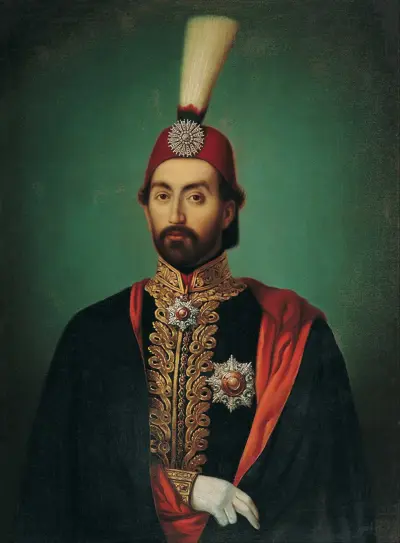
Abdulmejid I, was the 31st Sultan of the Ottoman Empire and succeeded his father Mahmud II on 2 July 1839. His reign was notable for the rise of nationalist movements within the empire's territories. Abdulmejid wanted to encourage Ottomanism among secessionist subject nations and stop rising nationalist movements within the empire, but despite new laws and reforms to integrate non-Muslims and non-Turks more thoroughly into Ottoman society, his efforts failed.
