Marquis de Lafayette Quotes
In America there are none poor, and none even that can be called peasants. Each citizen has some property, and all citizens have the same rights as the richest individual, or landed proprietor, in the country.
Lafayette, Marie Joseph Paul Yves Roch Gilbert Du Motier. Memoirs, Correspondence and Manuscripts of General Lafayette. Vol. 1, Saunders and Otley, 1837, p. 94.


Actually originated by William Jennings Bryan in a 1900 campaign speech. See {640984} . The slogan became the name and first line of a poem and also a song. See {609937}

At the time of this quotation, the nation had gone through more than 3 decades of enormous increase in prosperity for the wealthy, and modest gains for the highly skilled, technically trained workers. However, correcting for inflation, average salaries did not increase at all. The middle class was particularly hard hit. Only 20 percent of the population benefitted from the growth at all; however, the 1 percent had rarely prospered more. Kenworthy’s principle did not apply for this period of American history.

The only publication with a full time Poverty beat


Of all the inequalities that existed in society, the easiest one to overcome with effort is wealth. Race, blood, parentage, even education are not as easily overcome. Of all the inequalities, traditionally Americans have been least offended by that of wealth under the theory that with current effort that can often be overcome. It is only in the latter part of the 20th century where modern economics and sociology have shown that wealth inequality itself is also difficult to overcome, that money as a societal leveler has been conceptually diminished. Sedgwick was the first American to identify the phenomenon that had operated in early America.


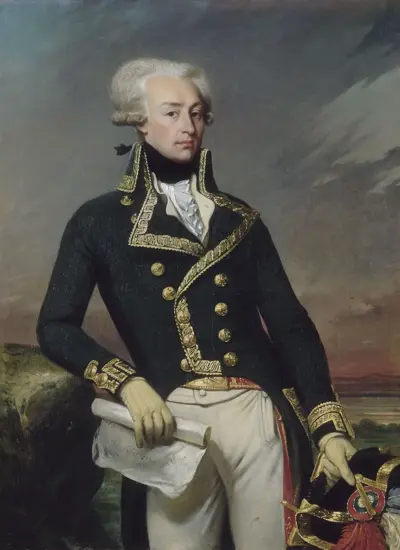
Marie-Joseph Paul Yves Roch Gilbert du Motier, Marquis de La Fayette, known in the United States as Lafayette (/ˌlɑːfiːˈɛt, ˌlæf-/, French: [lafajɛt]), was a French aristocrat and military officer who fought in the American Revolutionary War, commanding American troops in several battles, including the siege of Yorktown. After returning to France, he was a key figure in the French Revolution of 1789 and the July Revolution of 1830. He has been considered a national hero in both countries.
