Michael Oren Quotes
In 1776 one-fifth of America’s trade ran through the Middle East and that trade involved, in essence, large barrels of rum from Boston in particular, which were sent out of New England to the Ottoman Empire. There it was dumped and the barrels were filled up with opium. From there, the ships went to China and they dumped the opium in China and filled it up with tea and came back to New England.
This is how the American patriots obtained the tea that was thrown into Boston Harbor during the Boston Tea Party.
Michael Oren, Middle East Historian, Interview at the Carnegie Council, January 18, 2007
Sourced by: Eigen's Political and Historical Quotations

Cixi had issued a 10 point edict designed to end opium use in China. One of its most interesting elements was that it only applied to Chinese under the age of 60. She recognized that for those elderly people who are thoroughly addicted to opium, prohibition would be to radical a change and their life expectancy was not very long. At the time, the average lifespan of Chinese was under 50.

He was the first Chinese official to make opium illegal. However, British many merchants were involved in a complicated trade scheme whereby they brought opium to Canton. They paid not attention to the new laws against opium the same as their Chinese customers. Lin Zexu, perceiving Queen Victoria to have powers equivalent to the Chinese Emperor who could do anything in China, He assumed that the Queen could and would control the merchant’s behavior, and before punishing the British merchants, he was putting the Queen on notice. There is no record of what Victoria did, if anything. When Lin Zexu tried to enforce his ban on opium, the British Merchants resisted and the First Opium War broke out between China and Britainin which the Chinese were humiliated and resent to this day. A bronze statue of Lin Zexu was erected in his honor in Chatham Square (Kimlau Square) of New York City's Chinatown.

This is a particular fascinating quotation. First because the American liquor trade and Prohibition are paralleled to the opium trade in China. Second, is illustrates that the opium growing problem of the 21st century was virtually the same as that which existed at the beginning of the 20th century. The only difference is that the location moved from China to Afghanistan.

This was an expression of concern from the merchants of Rhode Island to England regarding curtailing aspects of the slave trade. Ironically, this Remonstrance is one of the first documents objecting to the management of America’s affairs by England when America had no representation. Therefore it played a part in the process which culminated in the American Revolution and freedom from England. And yet the subject was not freedom at all but just the opposite—the prerogative of maintaining the slave trade. Note that the appeal to the Board of Trade was not couched in ethical or political argument but as a mercantile argument—Rhode Islander’s would import less British goods.

The Chinese authorities wanted to stop the distribution and use of opium, but the British merchants, in one of the more disgraceful episodes of British history, would not stop the trade and actually went to war when the Chinese tried to stop the opium trade. See {625957} for more on this incident and the First Opium War that followed.


In 1839 opium was the leading commodity internationally traded in the world. The Chinese told the foreign opium merchants to cease trade in China. When they refused the Chinese dumped the opium into the river. English opium merchants demanded that Parliament force the Chinese to make restitution even if it meant war. Parliament agreed and started the Opium War. Gladstone, then an MP was one of the few who took the Chinese side when addressing the traders.


3rd Viscount Palmerston. This historical quotations illustrates the worst of the British Empire. British merchants were making large profits shipping opium to China and selling it there. Drug addiction became a major problem and some local Chinese Authorities passed laws banning the importing and selling of opium. However, the English merchant ship captains paid no attention to these laws claiming their rights as Englishmen to free trade. The Chinese finally seized a number of shipments of opium and burned them. The British then appointed Captain Elliot to lead a squadron of ships to China, arrange for payment in compensation for the value of the seized opium and to open up the opium trade, by force if necessary. The Chinese position was not unreasonable and Captain Elliot was not able to secure the concessions the English government wanted without starting a small war with the loss of many lives. Temple, who was the Foreign Minister at this time, fired Elliot and replaced him with someone who was less concerned about problems of drug addiction and the Chinese. Thus began the First Opium War. Note that the then British view of equity was that if they had to send an expedition of ships and soldiers to force the Chinese to allow the English to sell opium, then part of the terms must be that the Chinese pay the costs for the British ships and soldiers who invaded their country and forced them to keep poisoning their own people. See {621319} for Captain Elliot’s view.

This historical quotation enables us to date the importation of slaves into Massachusetts to as early as 1638. It also shows us that even though the Spanish had enslaved Negroes from Africa, when English ships raided Spanish ships and seized their booty, they considered the slaves as property and took them to then sell for the money. Had they had a different point of view, they might have freed the Back slaves who had been captured by their enemy, the Spanish. But they did not and money and money was the major motivation.

This attempt to restrict the opium trade led to the First Opium War between England and China. Some historians, and the Chinese at the time, characterized this as a legitimate attempt to rid China of a terribly debilitating vice. The English saw this as a protectionist measure against a trade agreement so that only Chinese businessmen could import and sell opium instead of competing with an open, free market. Some Chinese officials and advisors were motivated by one or both of these reasons, but they never considered at the time, general prohibition of opium. This was not done until the Empress Dowager prohibited the use of opium for all under 60 years of age in 1906, more than 70 years thereafter. See {641732}.

British merchants and the East India Company made huge profits from the drug trade buying opium in India and selling it to China where it had become immensely popular. But when the Chinese (led by Lin Zexu) tried to ban the import of opium, the British fought two wars with China to force the reopening of the opium trade. At the end of the 20th century, some referred to England and the English Crown as the largest Drug Cartel in history.

Most Americans were just beginning to comprehend the importance of international relations to American agriculture and our food supply.
“Tomans” were a quantity of money.

This was one of the first and is considered the best of the Colonial arguments against taxation without representation. The argument here about exports also affected other commodities—see {636866}. Despite this, Dulany is not well known in American history because when the Revolution finally came he was a loyalist.


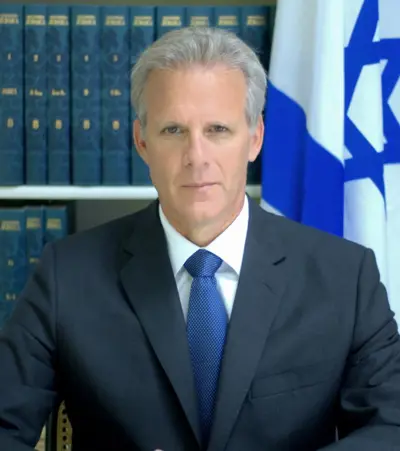
Michael Bornstein Oren is an American-born Israeli historian, author, politician, former ambassador to the United States (2009–2013), and former member of the Knesset for the Kulanu party and a former Deputy Minister in the Prime Minister's Office.
