George V Quotes
I venture to allude to the impression which seemed generally to prevail among their brethren across the seas, that the Old Country must wake up if she intends to maintain her old position of pre-eminence in her colonial trade against foreign competitors.
George V, 1865-1936, King of England & Ireland, Emperor of India, Speech at Guildhall, December 5, 1911
Sourced by: Eigen's Political and Historical Quotations


Commenting on why the French conducted industrial espionage against American companies:

This was an expression of concern from the merchants of Rhode Island to England regarding curtailing aspects of the slave trade. Ironically, this Remonstrance is one of the first documents objecting to the management of America’s affairs by England when America had no representation. Therefore it played a part in the process which culminated in the American Revolution and freedom from England. And yet the subject was not freedom at all but just the opposite—the prerogative of maintaining the slave trade. Note that the appeal to the Board of Trade was not couched in ethical or political argument but as a mercantile argument—Rhode Islander’s would import less British goods.


5th Earl of Rosebery. With free trade, there are winners and losers. The advocates observe that overall, there is a great benefit to most countries engaging in free trade, but some sectors of the economy, and some areas and groups of people fare poorly.

It is very easy for an American company to make parts in the United States, ship them to Mexico for assembly and bring the finished product back. However, for counties like France it is much more difficult.

In England at the time, the liberals were for free trade and the conservatives against. In both England and America both liberals and conservatives have flip flopped their roles in foreign trade several times. Free trade is a two edged sword; it aids domestic growth, employment and prosperity in some cases and hurts them on others. And there are always winners and losers for each example of free trade within any country. The result is no long term commitment and much flip flopping.


This was typical of a free trade agreement of the time. It also provided that Englishmen residing for trade in the Ottoman Empire be free of Ottoman poll and head taxes. The Ottomans had such arrangements with France and Venice—then an independent city. In addition to the trade advantages, the Ottomans were militarily concerned with Spain and the English-Spanish hostility was supported and welcomed by the Ottomans. See Murad’s 1590 letter to Queen Elizabeth.

Foreign trade creates jobs and eliminates jobs. The people who lost jobs as the result of increased foreign trade are readily identified while the job beneficiaries may never know the reason. So it is a hard political sell even though most of the economic studies have showed that more jobs of more value are created by trade than lost. However, the losers are generally blue collar workers while the beneficiaries are generally white collar and knowledge workers. So there is a socioeconomic class differentiation in the trade issue.


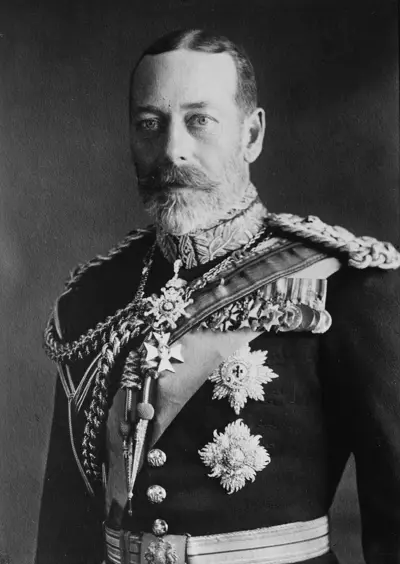
George V was King of the United Kingdom and the British Dominions, and Emperor of India, from 6 May 1910 until his death in 1936.
