Carl Hart Quotes
If we were going to look at how pharmalogical drugs influence crime, we should probably look at alcohol.
Hart, Carl. High Price: A Neuroscientist's Journey of Self-Discovery That Challenges Everything You Know About Drugs and Society. Harper, 2013.


He was describing the way that the Colonial America, Native American communities coped with the adverse consequence of violence brought about by liquor which had been given to the Indians by white traders for the purpose of impairing the Indians’ judgment so that they would trade more easily and on better terms. Since then and into the 21st century, business people have entertained’ potential customers with alcohol for the same general purposes.


The reason that this is a noteworthy quotation is that it illustrates a problem of alcohol and other drug prevention. Specifically, the “fact” that is the message of the billboard is not correct and exaggerates the danger. The general problem is well-intentioned but inaccurate and misleading information provided to the public. When the public, especially young people, discover that the government or the other organization urging the public to eschew drugs is not telling the truth, they not only tend of disbelieve all anti-drug messages and believe that the warnings given are just part of politics or prudish elements of the society. In this case, many young people and adults have seen or know people who were heroin addicts and are no longer. They are not hooked for life. Worse, a single dosage of heroin does not per se inevitably cause addiction. There have been people who used heroin once, continued to use and became addicts. But there are many more who have tried heroin once or twice who did not become addicted. The real risk is that if someone tries heroin once, he/she may become one of those who goes on and gets hooked. The billboard message is “WILL” and the truth is “MAY”.


This type of statement made by otherwise respectable government officials has developed a view on the part of many Americans that the Government lies about marijuana. See {617560} and {593333} .
Actually, The Surgeon General has explained that alcohol has been the most violence-inducing drug. There is no evidence whatsoever that marijuana causes violence.

This was a satiric attack on Republicans of 2012 who tended to see drug addiction as a moral failure but were very silent when Rush Limbaugh, the ultra-conservative radio talk show host turned out to be a drug addict. Limbaugh was one of the most influential Republicans of that era. The hypocrisy was that Limbaugh, along with many other conservatives, had been preaching for years, that drug addiction was not a medical condition, like other illnesses, but was a condition brought about by a moral failure of the addict.


It is not clear whether Fish actually believed what he was saying or was using extreme hyperbole for the purposes of passing an act he favored. This type of statement made by otherwise respectable government officials has developed a view on the part of many Americans that the Government lies about marijuana. See {593333} and {593334} for other examples.

Lister only compared opium in its then usual form. Stronger opiate derivatives such as Heroin and morphine were not studied by him at the time.

It is not clear that Wright actually used these words of the first title or the editors created it. The substance is his and the second line is definitely his. At the time, the average American mistakenly thought that China had a much higher consumption rate.
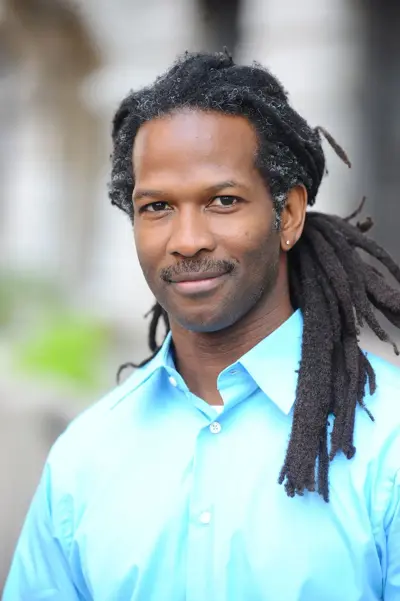
Carl L. Hart is an American psychologist and neuroscientist. He is a professor of psychology at Columbia University. Hart is known for his research in drug abuse and drug addiction. Hart is one of the first tenured African American professors of sciences at Columbia University.
