Sargent Shriver Quotes
If we play our cards right with the media, the Press will be our Inspector General’s Office. Encourage them to find any dirt on our programs and tell us. Then we can fix them or at least start to and everyone will be better off. We will learn of and fix out weaknesses, the press will have good stories, and the public will get better service. I can see some of you wondering what our own Office of Inspection is supposed to do. It is to find out about our problems before the press does, not to wait for complaints and then start looking. When a reporter comes to us with a scandal story of one of our programs, I would love to say, “Good reporting. That’s a serious problem and this is what we have been doing about it. Give us a hand and keep monitoring it, and let us know about our progress.” No one expects us to not have problems, but they do expect us to find them and fix them quickly, and that is what we must all expect of each other.
Sargent Shriver, Director, Office of Economic Opportunity, Democratic Candidate for Vice President of the United States, Senior Staff Meeting, Office of Economic Opportunity, October 1964
Sourced by: Eigen's Political and Historical Quotations

At the time there was no Secrecy & Classification System nor any laws enforcing secrecy or confidentiality. However there was no freedom of information laws of expectations even on the part of journalists. This was the first Freedom of Information policy of the American government. Some politicians were more open than others but there was no national, governmental before this. There were however leakers and whistleblowers though the terms were not in use. Note that Roosevelt herein created the first whistle blower protection—himself.

And the New York press is probably the most difficult and cynical in the world.

This is a notable quotation illustrating the state of relations between the press and the government under Theodore Roosevelt. Baker was one of the most muckraking of the investigative reports. And previously there were no accommodations for the press in government agencies. Roosevelt and most of his reformist appointees believed that public opinion was crucial to achieving their political objectives and that transparency would do them much more good than harm. Roosevelt and his colleagues had so much success with the press, that every administration since has made accommodations for the press and tried to use the press to promote their agenda. Most Presidents did not have the thick skin of Theodore Roosevelt who had been disrespected by some of the press since Abraham Lincoln. See {640476} for an example. Most Presidential administrations wanted the good press but also wanted to control the bad.


This principle is very important in all kinds of human activity. We design and test or pilot test products and programs of all kinds—governmental and not. The testing may uncover a flaw or problem, but the failure to find flaws or problems does NOT mean that they are not inherent in the program—they may well be there and have not been uncovered by the tests. Often when this occurs, we refer to them as “unintended consequences.”


His firm was not very vulnerable to that risk. However, reporters have been so frequently been lied to by corporations and politicians that many have reached the point where they hear a rumor that something is true, and then they assume it is and devote their energies to proving it. Gorman was intellectually right, but practically so many other corporate executives and politicians have prevaricated that there is not enough trust for a rational process.


Lincoln Steffens and Ida Tarbell had written exposes of business misconduct and lax government enforcement of laws. Politicians and business leaders were outraged and wanted something done to prevent this embarrassment and the riling up of the voting public. The President, a reformer himself, and a personal friend of Lincoln Steffens, took what seemed like a middle ground, where the government would not interfere with the 1st Amendment rights of the Journalists provided they did not go too far. But of course everyone had a different idea of “when to stop” so there never was a practical limit.

This quotation illustrates two things. First, Mrs. Roosevelt always donated the fees and royalties from her books, newspaper column and radio shows. Second, it seems incredible to us today, that this first lady organized the social schedule of the White House, wrote a daily newspaper column for years, authored a number of books, and had her own radio show—all while she was First Lady. She had the additional role of traveling about the nation, observing and giving speeches and press conferences as a proxy for FDR whose polio handicap made traveling very difficult. She also wrote or orally reported to her husband the material aspects of each of her trips, although she was so open that he and everyone else could read about it in the newspapers. She did all this with a staff of only 2 people. There has probably been no one in the history American politics, perhaps other than Thomas Jefferson, who was so busy and productive.
Most politicians and their families do not consider these as unimportant and many resent the endless intrusion into these aspects of life. Mrs. Roosevelt did so it was no problem for her—she even wrote about them in her daily newspaper column. All her family doings were completely open as were her political and administrative and professional activities. She welcomed press to accompany her anywhere whenever they wanted. Her view of her private domain was her private thoughts. This was a great attitude to have for a politicians, but it is rare.


Note that his principle goes beyond the usual call for transparency, but places the responsibility for getting the information to those who should have it on the political leader and the government. Active communication is required; not simply making information public/


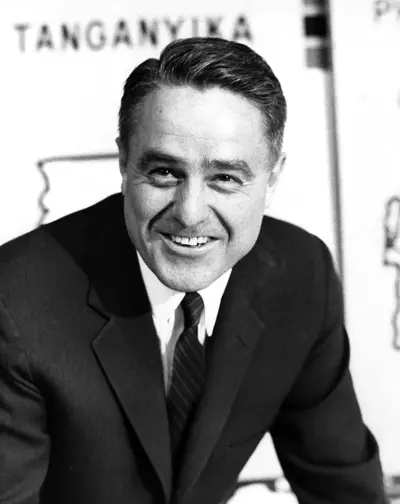
- Born: November 9, 1915
- Died: January 18, 2011
- Nationality: American
- Profession: Politician
Robert Sargent Shriver Jr. was an American diplomat, politician and activist. As the husband of Eunice Kennedy Shriver, he was part of the Kennedy family. Shriver was the driving force behind the creation of the Peace Corps, and founded the Job Corps, Head Start, VISTA, Upward Bound, and other programs as the architect of the 1960s War on Poverty. He was the Democratic Party's nominee for vice president in the 1972 presidential election.
