Carl Levin Quotes
If the large banks can do this without breaking the rules, then the rules should be revamped.
Carl Levin, U. S. Senator (Democrat, MI), Referring to the “Whale Trades” and other massive, risky derivatives trades, Senate Hearing, March 15, 2013
Sourced by: Eigen's Political and Historical Quotations

At the time, the financial industry spent more money for lobbyists and campaign contributions than any other sector of the economy. The result is that they had extraordinary access to and influence upon members of Congress and their staffs, that more often than not, the actually drafted the language for laws, amendments and regulations and then les the strategy to pass the legislation or finalize the rule. Moreso than any other industry, they wrote their own rules. Even after the Meltdown of 2008 and the Great Recession where there was a public outcry for reform, the Dodd Frank legislation was influenced by the industry and after passage most of the rules and interpretations were written by the industry or greatly influenced by them.


He was referring to Fannie Mae, the government-created. private mortage guarantee company. It was heavily regulated, and in general it met the regulatory requirements. However, the requirements were insufficient, and in the 2008 Meltdown and the Great Recession that followed, Fannie Mae itself was in such bad financial condition, that the Federal Government had bail them out or have the entire home mortgage industry fall apart.

The result was regulation of the banks and the creation of the SEC to regulate the stock market, However, over the years, the regulations were not able to keep up with the sophisticated development of new forms of investments and financial instruments and the financial industry were able to speculate with other people’s money in ways that FDR and his reformers never imagined. Finally, even the regulation that did exist was weakened by the policies of the George W. Bush administration and the combination brought about the Great Recession of 2008 where the profits from excess speculation were privatized and the losses, socialized with the taxpayer and the American worker bearing the brunt while most of the speculators were bailed out and made more money than ever. The Obama administration tried to reform the situation, but was unable to put an end to the legal speculation with other people’s money or of having institutions that were “too big to fail.”
Modern finance is so complex and convoluted, that any laws or regulations that government makes are quickly evaded by even more complex and convoluted schemes which the legislators and regulators have to try and control. By the time they learn and understand and finally develop measures to regulate those, the cycle starts again. Hence the “fool’s errand”

The Dodd Frank bill was designed, in the aftermath of the large bank induced meltdown of 2008 and the Great Recession, to regulate the banking industry so that no bank would be “too big to fail”. However, although the bill placed many restrictions on the banks to prevent much of their risky economic behavior, which the banks complained inhibited their growth and profitability. However, the bill did not put any limits on the size of the large banks and their critical proportion of the U. S. Financial System. If a bank was large enough, the government did not dare allow the bank to fail regardless of how profligate the Bank had been with its depositors’ money. So the shareholders made big money from the Bank’s risky behavior if it turned out well, and if not the taxpayers had to bail the banks out, because they were too big to fail without causing much of the rest of the country to also fail. Warren and others wanted a simple solution. Break up the large banks into smaller ones and then if any one of the small units makes poor investments, the bank could fail and other than its shareholders and creditors, the effect would not be so serious that the government could not allow the bank to go into bankruptcy. Mismanaged banks could fail like other mismanaged companies and not take down much or the rest of the country with them. But the banks lobbied to prevent that, and by 2014, 6 years after the taxpayers had to bail out banks that were too big to fail, many of the banks were twice as large as they were when they were already too big to fail.


More than 20 years later, after unregulated finance enabled the Great Depression, Franklin Delano Roosevelt, finally got the Securities and Exchange Commission passed by Congress. By the beginning ot the 21st century


The Meltdown of 2008 and Great Recession that it caused


This was a very important quotation because Cox was a strong advocate of deregulation and voluntary regulation, and that is why he was appointed to head the SEC by George W. Bush. He was the leading Republican expert on Regulation of the Stock Markets and sale of public securities. However when the Meltdown of 2008 hit, it was clear to all but the extreme ideologues that some Federal regulation was necessary. Nonetheless, it took several years to reform the regulations for the financial industry with the Banks and Wall Street fighting it all the way and by that time the Republican Party had been so dominated by ideological conservatives that the views of Cox and others no longer had much influence. They fought the Dodd-Frank reforms to go preserve self regulation to a great extent.


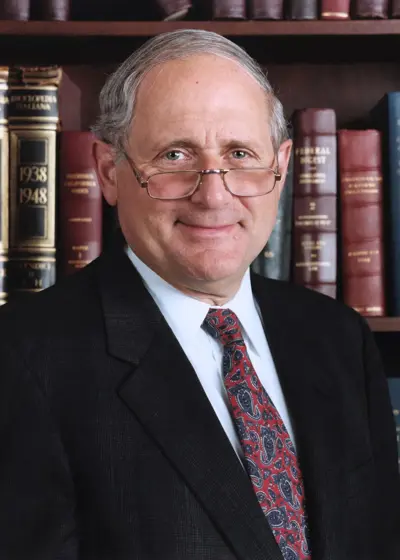
Carl Milton Levin is an American attorney and retired politician who served as a United States Senator from Michigan from 1979 to 2015. He was the chair of the Senate Committee on Armed Services and is a member of the Democratic Party.
