John A. McCone Quotes
If South Vietnam falls to the Communists, Laos and Cambodia would certainly go, followed by Thailand, Indonesia, Malaysia, and eventually the Philippines
Ford was then a member of Congress. This was known as the “Domino Theory” and was the strategic reason that sending troops to Vietnam was in America’s vital Interest. However, the Domino Theory was incorrect. Vietnam did fall to the Communists, and yet NONE of the countries became communist. Actually, they became even more democratic.
John A. McCone, 1902-1991, Director, Central Intelligence Agency, Statement to Gerald R. Ford, 1913–2006, 1963
Sourced by: Eigen's Political and Historical Quotations

The occasion was the visit to Washington of French Minister M. Jean Letourneau. The French were fighting the communists in Vietnam and the U. S., not yet in the fight, promised material and political aid, but no military participation. It was almost a decade later that America sent its first military personnel to Vietnam. The West was persuaded that the French could handle the situation. When they were defeated, America and Britain assumed that it was the notorious military incompetence of the French that accounted for the situation rather than the competence and commitment of the Vietnamese Communists and their support of the majority of the people.


President Johnson had invited Ike to the White House to advise about the Vietnam War in general and the Rolling Thunder operation in particular. President Eisenhower’s quotation was one of the clearest statements of the so-called Domino Theory which was believed by almost all American Military and Foreign Policy leaders. It was tragically wrong, but it drove U. S. policy throughout the war. When the Communists took South Vietnam, there was no subsequent Communist takeover or attempt in any of the countries Eisenhower had enumerated. One of the reasons was that the Vietnam Communists were not very close to the Russians and for over 1000 years had considered China their worst enemy. They had little solidarity with the International communist movement, but American intelligence did not realize that. They did not believe that the ethnic hatred between Vietnam and China would inhibit the Vietnamese in modern times. It did. Even after the war, the Vietnamese developed better relations with the U. S. then they had with China. One of the major things the intelligence and policy operators missed was that there was not a single map in China that showed Vietnam as a country. To the Chinese, it has always been a part of China and they want it to be in the future. The Vietnamese have not agreed for a millennium.
The reference to Munich referred to British Prime Minister meeting with Adolf Hitler in Munich, giving Germany some of their demands while receiving assurances that there would be no further aggression. This appeasement just encouraged Hitler to take more and soon he had invaded all of Europe beginning World War II. The view since has been that a dictator must never be appeased in unjust aggression, even on relatively small items. What made the Vietnam War so complicated was that while it appeared that the attacks on South Vietnam by Communist North Vietnam was a first step of general Communist Aggression, the reality was that it was primarily a Civil War where the South was a massively corrupt, Catholic Controlled dictatorship and the North was a Communist dictatorship dominated by Buddhists. And there was major friction between the Vietnamese Communists and the Chinese Communists who were not working in concert for general Communist domination. The North Vietnamese were a nationalist movement. The Domino Theory had been wrong.

The first has already occurred; the second is still an open question.


Both President Truman and Genera MacArthur, in command in Korea, received this report and several confirmation reports in the subsequent days. On October 30, 1950, 100,000 Chinese troops attacked across the border almost driving MacArthur’s forces into the sea. The Chinese then pushed Allied forces all the way back to the 38th parallel—the divide between North and South Korea. This is yet another stunning example of the major international security events where the Central Intelligence Agency was in the dark and misadvised the administration. See {634967} for another quotation on this Central Intelligence Agency weakness.


Agree resigned from the CIA in protest to its political positions.


Bill Casey had an individual ideology of the world and being a strong administrator imposed that on most of intelligence analyses that the agency did during his tenure.


Helms had very bad experience even in hinting at unfavorable news about the Vietnam War. See {634520}. He didn’t even send copies to his own executives, the White House Chief of Staff or the other White House staff like the National Security Advisor who would normally receive copies of top secret memos.
This was one of the great blunders of the Central Intelligence Agency in American History. As the Central Intelligence Agency was writing this report the Russians were landing missile components in Cuba. Within days the Cuban Missile Crisis would erupt. The Central Intelligence Agency also missed the Communist Takeover in China, the fall of the Berlin wall, the implosion of the Soviet Union, the Hungarian Revolution, the Iran Revolution, the Russian invasion of Afghanistan, and the Arab Spring just to list a few of the most dramatic events about which they failed to have any information in advance. At the same time they claimed that there were nuclear weapons in Iraq leading to the Iraq war and claimed the Soviets were on a track to have a better military and stronger economy—see {635791}.

Most Americans had not then realized that American troops had gotten involved in the Vietnamese Civil War. For some this was shocking. Kennedy helped his brother, President Kennedy, arrange for a coup to replace President Ngo Dinh Diem in which the man we pledged to “stand by” was murdered. He turned out to be thoroughly corrupt, and had little if any more respect for democracy and human rights than the North Vietnamese leadership did. Nonetheless we broke a pledge to an ally. This and similar promises that are not kept complicates American diplomacy as there is rarely complete trust in the pledges of American officials.


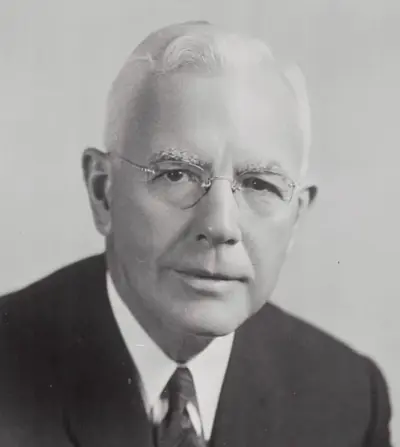
John Alexander McCone was an American businessman and politician who served as Director of Central Intelligence from 1961 to 1965, during the height of the Cold War.
