Hideki Tojo Quotes
If one of you should detect any dissatisfaction or unsettled feeling within your jurisdiction, you should take immediate and concrete steps for the complete removal of these elements ... Now the people of our nation must endure their inconveniences and overcome painful hardships in order to win this war.
“Removal” was interpreted by some as killing and by others as jailing. Complaining about wartime suffering or hardship was a crime in militaristic Japan.
Hideki Tojo, 1884-1948, Japanese General & Prime Minister, Radio Broadcast to the Japanese Prefecture Governors, Quoted in Fourth International Vol.5 No.2, February 1944
Sourced by: Eigen's Political and Historical Quotations


Assigned to the Treasury Department to create war bond posters


This quotation gives us a concept of the WWII home front effort where virtually everyone in American society was personally involved on a daily basis in the war. See also {637440}. This was so dramatically different from the home fronts for the wars in Afghanistan and Iraq where most of the American public had no direct contact with the war effort and was not called upon or even needed to do anything.

FDR’s attempt to cap WWII income with any excess going to pay for the war failed as the wealthy in the country pulled out “all the stops” to defeat the proposal. Roosevelt was able, however, to get a maximum tax bracket of 88 percent on all income over $200,000 which was less onerous to the very rich but still terrible. They could not defeat that proposal.


This statement is perhaps the greatest and most eloquent description of the United States exceptionalism and its behavior in WWII. Such a statement could only come from a non-American.

The American Army had just liberated Bellau Wood, but had lost almost 8,000 men.

At the height of his professional career, this Hall of Famer enlisted in the WWII Navy and was an anti-aircraft gunner and fought in the Pacific.


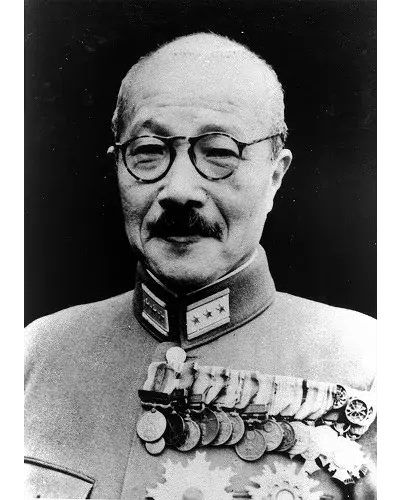
Hideki Tojo was a Japanese politician and general of the Imperial Japanese Army (IJA) who served as Prime Minister of Japan and President of the Imperial Rule Assistance Association for most of World War II. During his years in power, he assumed several more positions including Chief of Staff of the Imperial Army before ultimately being removed in July 1944.
