Max von Laue Quotes
If diffraction or interference phenomena were to be sought it was therefore necessary, in accordance with the basic principles of wave theory, to select for the test arrangement far smaller decisive dimensions than those employed in corresponding tests with visible light.
Laue, Max von. "Concerning the Detection of X-ray Interferences." Nobel Lectures, Physics 1901-1921, Elsevier Publishing Company, 1967, pp. 347-355.


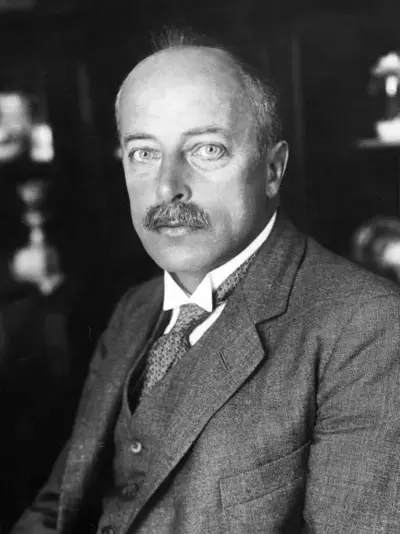
Max Theodor Felix von Laue was a German physicist who received the Nobel Prize in Physics in 1914 for his discovery of the diffraction of X-rays by crystals. In addition to his scientific endeavors with contributions in optics, crystallography, quantum theory, superconductivity, and the theory of relativity, he had a number of administrative positions which advanced and guided German scientific research and development during four decades. A strong objector to Nazism, he was instrumental in re-establishing and organizing German science after World War II.
