John Murtha Quotes
If Dick Cheney, Donald Rumsfeld, and George W. Bush had ever been in combat themselves, they might not have sent troops to Iraq.
The three leading “hawks” of the administration and the architects of the Iraq War. However, not only had none of them ever been in combat, but none had ever served on active duty in the military. None of the three had been drafted or enlisted during the Vietnam war except for Bush who was accepted into the Texas Air National Guard; parts of his service record has been last, but he never was outside the United States. Murtha, John Kerry, John McCain and many of the administration's critics were all decorated war heroes who had been wounded in action.
John Murtha, U. S. Congressman (Democrat, PA), Quoted on CBS 60 Minutes, January 15, 2006
Sourced by: Eigen's Political and Historical Quotations


The first non-PRI President in over 70 years.


Podharetz was citing the Vietnam war. The two American occasions where the plausibility seemed to fade were the Vietnam War and The Irag war. Both Presidents Lyndon Baines Johnson and George W. Bush as Bismarck predicted, had much political trouble over the wars.

Kennen, one of the great American wise men for foreign affairs, could not have predicted the outcome of the Iraq war any better.

This quotation is a good example of how tolerant some nations can be in terms of maintaining diplomatic relations and trade relations with other countries. The American and English governments chose to simply protest and condemn the slanderous statement but decided that the Prime Minister was pandering to his political local Islamic base, so took no further action and kept open diplomatic relations. Mahathir had a history of being very accusatory of the West with respect to anything that affected the Arab Muslims. The number of Muslims killed by the Americans and British in the Iraq War was very small compared to the huge number of Muslims killed by other Muslims in their Sunni Shiite civil war. While Bush and Blair both generated support for the Iraq invasion by making claims of WMD development in Iraq that were false, it is not clear whether or not they knew their statements were false, should have known that they were false, created an atmosphere against Iraq that was likely to produce false accusations, or were simple misled by poor intelligence. Mahathir, of course, chose to assume the worst case, and claim it was true, which is what many people think Bush and Blair did in analyzing the intelligence on Iraq.

The Type I thinker—one whose intuition is dominant—tends not to be conscious of the mental processes which go into his decision making. He does not analyze and ruminate as the Type II thinker does. See {625103}.


Bush assumes that this meant that all the people agreed with his decision to invade Iraq. While that might have been the case, there are other possibilities that many historians, journalists and other analysts have suggested. The Vice President, and his personal staff, were known to have visited them all and lobbied for the invasion. They pressured several of them who may have not wanted to run afoul of what seemed to be the most powerful vice president in American History. Or they may have thought that the decision had already been made, and it was time to join together and loyally support the policy decision that had been made. There were few strong independent thinkers in the top tier as Bush was not intellectually or emotionally inclined to have open staff arguments to work out a policy or very strong advisors with different points of view. The strongest of the advisors like Secretary of State Colin Powell had been lied to and persuaded there was “clear evidence” that Iraq was about to deploy a nuclear weapon. This made Powell an advocate. The intelligence given to Powell and the others was wrong and much was fabricated or obtained from an unreliable source who had been pushed as trustworthy by the Vice President. The CIA Director, had told those all that the evidence and case for the fact that Iraq was developing and close to deploying a nuclear weapon was a “slam dunk”.

The term “Chicken Hawk” was also used by Ron Paul in the Republican Presidential Nomination Debates in 2012. Of the 8 candidates in the debate, he was the only one opposed to military intervention abroad and he was the only candidate who had served in the military. Many Chicken Hawks not only never served but applied for deferments and used other techniques to avoid military service. The origin of the term is uncertain but it entered print in the late 1980s and was applies to Vice President Dan Quayle why was a strong war supporter but had used family connections to gain admission to the Indiana National Guard and thus avoid service in the Vietnam War,


He served Presidents Reagan, Clinton, and both Bushes


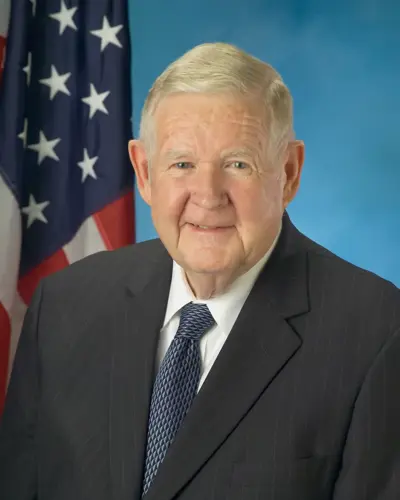
John Patrick Murtha Jr. was an American politician from the Commonwealth of Pennsylvania. Murtha, a Democrat, represented Pennsylvania's 12th congressional district in the United States House of Representatives from 1974 until his death in 2010. He is the longest-serving member ever of the United States House of Representatives from the Commonwealth of Pennsylvania.
