Edna Ferber Quotes
If American politics are too dirty for women to take part in, then there's something wrong with American politics.
Edna Ferber, 1887-1968, Author, Cimarron, 1929
Sourced by: Eigen's Political and Historical Quotations


She was the First Lady, who in many ways was also one of the nation’s leading feminists. Betty Ford, Barbara Bush, and Hillary Clinton were also First Ladies who supported key feminist position but ER was 30 years ahead of them—a time when conservatives and sexists viewed her as a dangerous radical. For example, see {585211}.


Mrs. Thatcher was not a fan of feminists because so many of them were also liberal in their politics. However, she herself and her life example was one of the great feminist statements of the 20th century. She also held a disrespect for men that was typical of the most ardent feminists.

First female presidential candidate & first divorcee to run for that office

Ingersoll was considered to be the greatest orator and political thinker of his day, but his overt atheistic views curtailed his elected political career.


Jinnah was a modern Islamist who saw the role of females in a modern context. He, like the Indian Hindu leaders were in a sense products of the West and Western government and education. He would be very surprised that in his Pakistan men can murder their female relatives who they believe have dishonored the family, or that women would not be educated in the Madrassas, or that authorities could sentence a female relative of a man deemed guilty of seduction to be gang raped, but that is what happens in modern Pakistan. Jinnah and many of the early leaders believed that their new government could modernize Islam but the control and influence went the other way. Pakistan became a religiously dominated autocracy rather than the democracy that Jinnah foresaw.


Mrs. Roosevelt thought that with the rate of improvement in society’s perception and treatment of women was improving so steadily that women in America were not far from equality. Because of the shortage of men on the home front in WWII women had performed well in virtually all occupations including welding, heavy construction and management and it was just a matter of time to reach equality of pay and parity. However, she and most feminists did not take into account the 2 million men returning from military service who wanted their jobs back. Sexists, who had been suppressed during the war when they objected to women in non traditional occupations, were no longer silenced by national necessity. An occupational backlash developed. Then a sexual one regarding contraception and family planning, (Condoms for example were illegal up to 1963 as birth control device). Each major step forward was accompanied by its own backlash and even in the Presidential Campaign of 2012 contained debate on women’s control over their own bodies relative to abortion and contraception.

The Bible and the Church have been the greatest stumbling blocks in the way of women’s emancipation.
The most important documents and doctrine of most churches were created by men who also established the framework of the religion. The result has in almost all cases been a sexist structure with women having not only little power not typically females are banned from all church governance. See {640303} for her quote on religion in general vis a vis women.

Samuel Langhorne Clemens, 1835-1910


participating in the First World War This was not just a WWII happening. The process rally started in WWI.
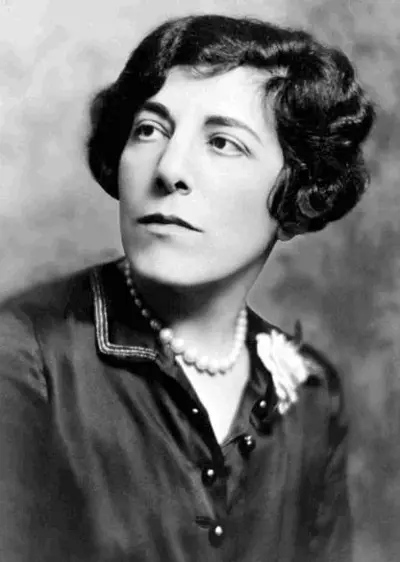
Edna Ferber was an American novelist, short story writer and playwright. Her novels include the Pulitzer Prize-winning So Big (1924), Show Boat (1926; made into the celebrated 1927 musical), Cimarron (1930; adapted into the 1931 film which won the Academy Award for Best Picture), Giant (1952; made into the 1956 film of the same name) and Ice Palace (1958), which also received a film adaptation in 1960.
