George Bernard Shaw Quotes
If a woman can, by careful selection of a father and nourishment of herself, produce a citizen with efficient senses, sound organs and a good digestion, she should clearly be secured a sufficient reward for that natural service to make her willing to undertake and repeat it.


Birth control was not commonly available and knowledge about it was also sparce. Having many children was the “will of God” in common parlance.

At the time, condoms and other forms of contraceptives were illegal to buy, sell, possess or own. As late as 1963 a Connecticut druggist was sentenced to jail for filling a doctor’s prescription for condoms and selling them to a married couple even thought the woman might die if she again became pregnant. The Supreme Court (Griswald v. Connecticut) established that a woman had a right to control her own reproductive cycle and the government had no business interfering with a privacy right possessed by a couple. Roe v. Wade established the right to an abortion. The same moral compunctions used with abortion were, and still are used by some to oppose any form of artificial birth control. They argued: preventing a life was as serious a moral failure as taking one. Many Catholics, many evangelical and fundamentalist protestants, and some orthodox Muslims are today morally opposed to birth control and believe that the government should ban birth control as it once was in the United States.

This book was the first popular attempt to spread the eugenics concept. Is was translated into German in 1925 and unfortunately read by Adolf Hitler who sent Grant a complimentary letter. See {603544}


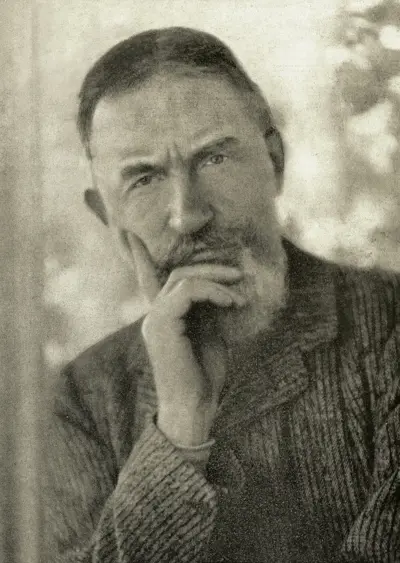
George Bernard Shaw, known at his insistence simply as Bernard Shaw, was an Irish playwright, critic, polemicist and political activist. His influence on Western theatre, culture and politics extended from the 1880s to his death and beyond. He wrote more than sixty plays, including major works such as Man and Superman (1902), Pygmalion (1912) and Saint Joan (1923). With a range incorporating both contemporary satire and historical allegory, Shaw became the leading dramatist of his generation, and in 1925 was awarded the Nobel Prize in Literature.
