Nathan Deal Quotes
If a State has reliable scientific information that demonstrates that a warning is needed for a particular food, then in the interest of public health, it should share that information with the FDA and petition for a new national standard.
United States, Congress, House. Representative Deal speaking on the National Uniformity for Food Act of 2005. Congressional Record, Government Printing Office, 8 Mar. 2006.


A Pure Food bill had failed to pass the Congress for years until Roosevelt took up the cause. The modern federal role in the quality control of food products had its origins with TR.


In 1988 a proposition regarding AIDS was on the California ballot which was opposed by every major medical group in the state. Just before the election Governor George Deukmejian endorsed the proposition. Three members of his AIDS California Task Force resigned in protest:


In Japan it was illegal to manufacture and sell cigarettes except for the government which maintains the cigarette monopoly and reaps $18 billion annually as a result. This label was all the government could bring itself to use. Japanese health authorities saw it as a type of victory since prior to this there was no warning whatsoever.


1st Earl of Beaconsfield. In the United States, President Theodore Roosevelt shocked the major business interests when he proposed regulating food and other government quality assurance of the private marketplace. Many Americans saw this as an overdue reform. One of the reasons was that Prime Minister Disraeli had advocated government regulation a quarter of a century earlier with statements like this quotation.

What is fascinating about this quotation is that each year in the United States millions of Americans get sick from contaminated food. Well over 100,000 need to be hospitalized, and over 3000 Americans die from food borne illness. Yet this Congressman from an agricultural state can make such an absurd statement. The US is better than most counties in terms of food safety, and is much improved over the last decades. However, it is certainly not COMPLETELY safe. Ideologically, he was trying to ward off calls for increased Federal Regulation of the Food System which he believed could not be as successful at making the system more safe as if the food industry engaged in self regulation. But it is common in modern politics to completely depart from the truth if the truth might create public and political pressure for legislation that the Congressman was ideologically opposed to. The end of reducing Federal Regulation for him justified a blatant untruth which misled the public who believed him. Worse, Americans have less trust in anything their legislators say as more and more are exposed making statements like this.

1st Baron Macaulay. This issue is still debated in America. Until the latter part of the 20th century, businesses could sell supposed medicines without any proof of efficacy or safety. The Government or others had to prove that there was something wrong with the product. Then, that shifted, and the burden of proof fell on the developer and seller of medicines as Macaulay favored, but sellers of vitamins and dietary supplements were exempted and operated under the previous American (anti Macaulay) position. Ironically, political opponents of requiring the drug company to prove safety and efficacy claimed that this was a radical new, untested idea that would inhibit development of medicinals. They did not realize that 150 years earlier, this was a standard, accepted point of view in England. Even into the 21st century, America operated with the inconsistent difference between vitamins and supplements, many of which have no beneficial effect whatsoever, and medicines.

This was the first cigarette company that admitted what by then had been known by the cigarette companies for almost 50 years during which they continued to knowingly kill people and deny that there was any harm that could come from smoking.

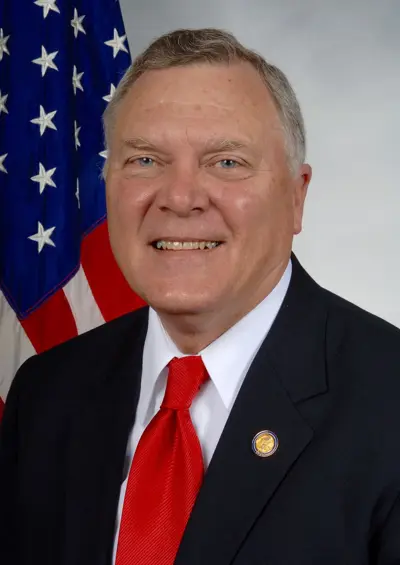
John Nathan Deal is an American attorney and politician who served as the 82nd Governor of Georgia from 2011 to 2019. He was elected to the United States House of Representatives as a member of the Democratic Party in 1992 and switched to the Republican Party in 1995. On March 1, 2010, Deal announced his resignation from Congress to run for Governor of Georgia.
