Mark Helprin Quotes
I was raised on the Hudson, in a house that had been the stable of the financier and Civil War general Brayton Ives. In midcentury, we had fire pits in the floor for heating, and rats everywhere, because they nested in the hay insulation.
Helprin, Mark. Digital Barbarism: A Writer's Manifesto. HarperCollins, 2009, p. 18.


Like many war leaders, Davis tried to dehumanize the Northerners, against whom the Confederates were fighting. His “”theory” was that The Southerners were the good and upright sons of the Founding Fathers but the Northerners were the “degenerate” sons.

President Lincoln and Several of the Commanding Union Generals had declared that black slaves were free during the midst of the Civil War under the legal theory that if the slaves were property of the rebels, then they cold be seized as “contraband” and removed from the control of those who had committed treason. The question was, what would happen to those now free Negroes after the war? Many Negro leaders were anxious that if there were surrender, then the status quo ante might prevail and the Negroes—many have who had fought for the Union might be returned to slavery. This speech by the Secretary of State alarmed them further. This is why the Emancipation Proclamation was so important and even that might have been overturned by a subsequent President. This is why Lincoln, the white radical Republicans and the Black leadership placed so much emphasis on passing the 13th Amendment.

Colonel Banks had given him the Regimental colors flag and urged him to take care to return it with honor. This was his famous reply. In the midst of the Battle he was hit fatally with a cannonball. A Black corporal then took up the colors and he too was killed and yet another Negro corporal took the flag and returned it after a battle where the Blacks were commended for their valor. This quotation has been quoted to military men and women throughout the world as an outstanding example of military bravery and honor..

This Civil War recruiting poster was described by the Free Library of Philadelphia as “Civil War recruitment print targeting African Americans by evoking the freedoms granted by the Emancipation Proclamation. Depicts a montage of symbolic scenes centered around an African American Union soldier triumphantly holding up a sword and an American flag with the banner "Freedom to the Slave." He stands near broken shackles upon a tri-color flag adorned with a coiled snake. The flag is tugged upon by one of three joyous slaves freed by an African American soldier. Other scenes depict an African American man reading a newspaper on a rocking chair near a plow and child, African American children entering a "Public School" near a church, and a regiment of "U.S. Colored Troops" marching across a battlefield strewn with dead bodies.”
The letter was also published in the Charleston Mercury, February 13, 1861. This was a particularly sophisticated understanding of the forces leading up to the Civil was as any in the South.
Southern intellectuals at the beginning of the Civil War were convinced of their invincibility. They misjudged both the effect of the industrial and technological might and the moral intensity of the North.

The Southern states were illegal rebels. A confederacy had always meant a voluntary association of otherwise independent entities. However technically the Southern states were not independent but in a state of illegal rebellion against the United States. Lincoln, a lawyer, could not being himself to refer to the South by their preferred name—the Confederacy. So this was how he and many in his administration referred to the South.

Although Great Britain had abolished slavery, British economic interests during the Civil War suffered because of the northern blockade of the South. Much political opinion in England was hostile to the blockade policies of the Union. Bright, a great admirer and supporter of the United Sates and the Union cause was concerned that the United States might drift into War with Great Britain. His letter to Senator Sumner was written with the understanding that it would be in shared with President Lincoln, and it was actually read at a cabinet meeting.

The Confederates were very clear that slavery was the cause of the war. Revisionists later tried to add other motives to the Southern cause, but Grant and all the contemporaries on both sides knew slavery was the crux of the matter. So the Confederate cause was the right to brutalize, torture, and even kill an unwilling labor force that was unpaid. No war in history had ever been fought for such a lowly cause and the Confederate leadership skills were amazing in keeping up morale without a decent cause to fight for.
One of the puzzles of American Civil War history has been how the poor whites of the South (who provided most of the military manpower that fought and died in the Civil War) were persuaded to fight against a much stronger, more highly industrialized, and more affluent few, that had many more soldiers. One of the main reasons, though difficult for us to understand today, was that the Southern leadership actually persuaded the Southerners that men from the North were cowards and lacked the character, virtue or will to fight. The general “party line” of the South was that one Southern solder was worth more than 5 Northern Soldiers,


After the Civil War and Reconstruction, the American nation was still bitterly divided intelelctually, socially, emotionally and poliotically. In an effort to bring more unity to America, most of the power stucture and the influentials of the nation began to avoid those issues that would divide North and South and try and promote a narrative that both sides might be able to live with. And this is what Zeitz describes in this quotation. America went through a period of Revisionist History that even in the 21st century was held by many people. It wasn't until the middle of the 20th century that the real history and narrative of the Civil War and Reconstrution emerged from the few academics who had all along criticized the fabricated narritive that did unify the country at the cost of historical accuracy and truth. Many scholars point out that the price that America paid for this unity was the Jim Crow era and a century of legalized racism. Much of the nation was built on the labor of Negro slaves and the victims of the slavery era, also bore the brunt of American unity and reconcilliation.
Lee was trying to negotiate a peace treaty as a part of his his potential surrender. However, Grant would not be drawn into that, Lee was NOT the government of the Confederacy, and Grant had served with him earlier in the Mexican War and knew he was not a fanatic on teh subject of slavery and race as most of the Southern leaders were. They werenthe ones who would have to be captured or driven to surrender. Grant could have gotten authoirioty as he was in almost real time contact with President Lincoln by telegraph. However, neither wanted to negotiate peace with Lee. Instead, Grant gave Lee and his men incredibly gracious termsof surrender which he and Lincoln hoped would casue the avarage Southern soldiers to feel better about surrender for although Lee's was the largest Confederate Army, there were still others out there that had to be dealt with,
These were the critical immediate events thst forced General Robert E. Lee to surrender at Appomatix. The surrender did not end the Civil War, but it made the end inevitable and close at hand.
His perception that the loss of the war for the South was God’s retribution for Southern Slavery and treason was very common in the North. The young man was shocked at the difference between the educational levels of he and his Michigan comrades vis a vis their Southern counterparts. The Southern slave-centered economy didn’t provide a very good education, even for its own white citizens. 150 years after the Civil War, the South was generally behind the rest of the country in average educational.achievement.
Armstrong was a Union military chaplain with the troops that had captured Petersburg, Virginia. It is interesting how much he and apparently many of the Union Soldiers saw their part in the war as a crusade to reform the South. Also, note that although the South was fighting to preserve the slavery system that benefitted the rich, the rich often did not fight or join the military. Surprisingly to us today, if a man owned a certain number of slaves, he was then exempt from required military service.
Armstrong was a Union military chaplain with the troops that had captured Petersburg, Virginia. Of particular interest in this quotation is his report on the attitude of the poor whites after the war had destroyed the economy of the area and reduced the former wealthy aristocrats to poverty.
This description of the Civil War had been widely quoted in that it conveys the inevitability of hostilities between North and South over slavery. Hundreds of compromises, arguments, enticements, were made since the founding of the United State but none or all of them could prevent the conflict over such a basic fundamental as slavery. Note that he coined the term before the war actually took place. The conflict was raging politically, journalistically and culturally.

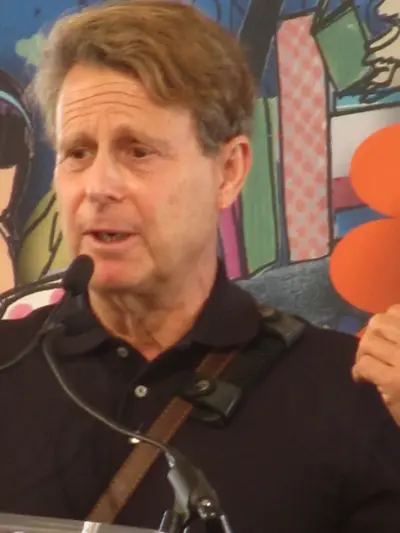
Mark Helprin is an American novelist, journalist, conservative commentator, Senior Fellow of the Claremont Institute for the Study of Statesmanship and Political Philosophy, Fellow of the American Academy in Rome, and Member of the Council on Foreign Relations. While Helprin's fictional works straddle a number of disparate genres and styles, he has stated that he "belongs to no literary school, movement, tendency, or trend".
