Peter Stuyvesant Quotes
I value the blood of one Christian more than that of a hundred Indians.
Stuyvesant, Peter. "Letter to the Directors in Holland." Documents Relative to the Colonial History of the State of New-York, edited by E. B. O'Callaghan, vol. 13, Weed, Parsons and Company, 1881, p. 114.

Mather was urging the community to protect their children against the Devil and his band. To exemplify just how terrible Devils were to his audience, he used a comparison to the worst thing the audience was familiar with—Indians. Although there were a few examples in Colonial America of Indians being perceived as benign or even people, they were few and far between, and tended to be in New York and Pennsylvania.


Many people have believed that the Nazis introduced anti-Semitism into German society and politics. This quotation is one of the very many what show that anti-Semitism was rife in Germany before Hitler ever came to power—back to the Dark Ages. The Nazis recognized it and took advantage of it by ascribing all of Germany’s ills to the Jews, knowing full well that there was underlying public opinion that would make that a good tactic.


The girl to which he was referring was President Donald Trump's daughter who married a Jewish man and converted to Judiasm.


Describing the ethnic immigration quotas that Congress was debating in 1924:


Disraeli was the 1st Earl of Beaconsfield

Brant had an English style Missionary education and was an Anglican, belonging to the Church of England. During the American Revolution, he persuaded most of the Iroquois tribes to fight for the British against the revolutionary colonists. However, the Oneida tribe was not persuaded and joined the rebel side. A few New England Presbyterian missionaries had targeted the Oneida people, and when that tribe chose the “wrong” side, Brant believed that the reason was their different religious point of view. After the Revolution, Brant and his Iroquois followers were driven out of their American lands and escaped to Canada, while the Oneida were given complete title to their lands by George Washington.


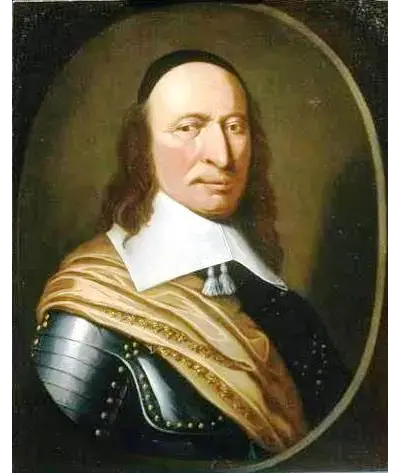
Peter Stuyvesant served as the last Dutch director-general of the colony of New Netherland from 1647 until it was ceded provisionally to the English in 1664, after which it was split into New York and New Jersey with lesser territory becoming parts of other states. He was a major figure in the early history of New York City and his name has been given to various landmarks and points of interest throughout the city (e.g. Stuyvesant High School, Stuyvesant Town, Bedford–Stuyvesant neighborhood, etc.).
