Albert Claude Quotes
I told him that for a modern scientist, practicing experimental research, the least that could be said, is that we do not know. But I felt that such a negative answer was only part of the truth. I told him that in this universe in which we live, unbounded in space, infinite in stored energy and, who knows, unlimited in time, the adequate and positive answer, according to my belief, is that this universe may, also, possess infinite potentialities.
Claude, Albert. "Banquet Speech." Les Prix Nobel en 1974, edited by Wilhelm Odelberg, Nobel Foundation, 1975, p. 41.


At the time, the public investment in science was just exploded as a result of the Manhattan Project, the effort that researched and built the first atomic bomb. By the end of the 20th century, a period of a little more than 50 years science research was funded in the billions of dollars and even correcting for inflation, the investment (Federal, State, and Local) had multiplied many fold.


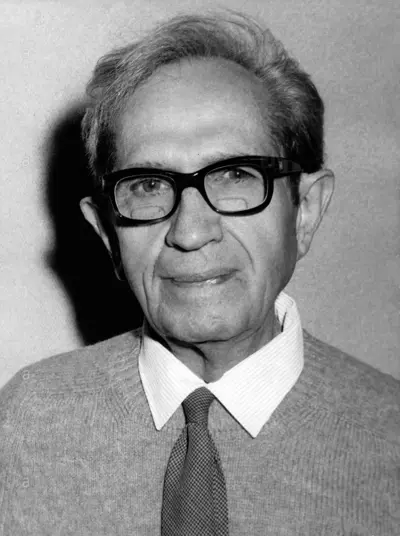
Albert Claude was a Belgian-American cell biologist and medical doctor who shared the Nobel Prize in Physiology or Medicine in 1974 with Christian de Duve and George Emil Palade. His elementary education started in a comprehensive primary school at Longlier, his birthplace. He served in the British Intelligence Service during the First World War, and got imprisoned in concentration camps twice. In recognition of his service, he was granted enrolment at the University of Liège in Belgium to study medicine without any formal education required for the course. He earned his Doctor of Medicine degree in 1928. Devoted to medical research, he initially joined German institutes in Berlin. In 1929 he found an opportunity to join the Rockefeller Institute in New York. At Rockefeller University he made his most groundbreaking achievements in cell biology. In 1930 he developed the technique of cell fractionation, by which he discovered the agent of the Rous sarcoma, components of cell organelles such as mitochondrion, chloroplast, endoplasmic reticulum, Golgi apparatus, ribosome and lysosome. He was the first to employ the electron microscope in the field of biology. In 1945 he published the first detailed structure of cell. His collective works established the complex functional and structural properties of cells.
