Gyorgy Ligeti Quotes
I think it was when I was nineteen, by that time the Jewish laws were already in force and the split was beginning to come about which isolated the Jewish culture.
Ligeti, György, et al. Ligeti in Conversation. Eulenburg Books, 1983.

In 1933, there was still a some of anti-Semitism in America. The persecution of Jews in Germany was very clear at the time, just from the statements and writings by Adolf Hitler and other high level government officials and the laws that they were instituting and proposing. McFadden was one of the extreme isolationists in Congress at the time. They knew very little of the rest of the world, and believed the false assurances provided by German officials and American anti-Semitic, Fascist, pro Nazi partisans. McFadden’s statement was not only contrary to fact, but is among the most naïve of Congressional speeches.


According to Bauer and his anti-Semitic followers, the problem with the Jews was Judaism

Despite Gross and the Nazi perpetrated holocaust, Jews not only are returning to Europe but have reached many of the highest achievements. (For example, French President Sarkozy was a Jew) Nazi’s however are almost extinct in Europe, and Germany has been one of the major leaders outlawing Nazi’s and their ideas.


This was one of the most hateful of his public speeches. He was one of the American “heroes” in Nazi Germany, receiving assistance from the Nazi government. Between his anti-Semitism and support for Hitler, Fascism and radical socialism, the Vatican ordered him off the air and shut down his political demagoguery.

All German Jewish Citizens were immediately disenfranchised including decorated military veterans.

Saint Benedicta was born and brought up as a Jew and converted to Catholicism. She and a few other leading German Catholics spoke out forcefully against Nazi crimes and immoralities. She was one of the few German Catholics who wanted the Pope to act more forcefully in Germany. The most controversial aspect of the Pontificate of Pius XI was his relative silence and failure to use the powers of the church and excommunication to condemn and control the Nazi rise to power and their, aggression, discrimination, and atrocities including mass murders. The Pope did occasionally speak out condemning the worst of the German Nazi outrages to morality, but he did not do so very vigorously or order the German Cardinals and other bishops to do so. Supporters of Pius XI point out that the entire Catholic Church in Germany was in peril. The Nazis might have shut down their churches, jailed or murdered priests and seize church property. Many of the German Catholics, including the clergy, were Nazi party members or supporters, and he feared a political schism of German Catholics as well. And Italy, surrounding the Vatican was then under the control of the Italian Fascists who were allies of the Nazis, The Vatican itself and its staff were themselves vulnerable and could have been easily occupied. Apologists for Pius XI observe that the entire Church and its leadership could have been wiped out had they ignored the practicality that the Fascists were in control and would tolerate the Church just so far. Saint Teresa and other Catholics who were outspoken, along with the few Protestant Lutheran Clerics who opposed the Nazis, were indeed arrested and Saint Teresa was finally murdered at the Auschwitz concentration camp. Even that did not galvanize Pope Pius XI to assertive anti Nazi action. The records of the Vatican for that period have not been opened for public study so it is not known for sure that the Pope even saw Saint Teresa’s letter or it was intercepted by the strong pro Nazi faction in the Vatican. That year, Pius signed a Concordat (agreement) with the Nazi Government which many in the Vatican naively believed would control and limit the worst of the Nazi actions. But by 1937, Pius condemned the “violations” of the Concordat and Nazi anti-Semitism as well (encyclical written in German, Mit brennender Sorge (With Burning Anxiety). His critics observe that he went no further, even with the Catholic Nazi clerics and other Catholics. The Carmelite order tried to protect Saint Teresa who was then just a non and leading Catholic intellectual (she had a PhD in philosophy) by sending her to a Carmelite facility in Holland. But the Germans overran the Netherlands, arrested her and sent her to Auschwitz where she was martyred. She was beatified by Pope John Paul II in 1987.

At the time, most of the world did not believe that the Germans were literally serious in their anti-Semitic rhetoric. It was assumed that this kind of talk was just populist rhetoric to get votes and maintain power. The main lesson of Nazi Germany is when leaders of a country, threaten the existence of another country or a people, they must be taken seriously, and not just as politicians being populists and pandering to an ignorant, biased public.


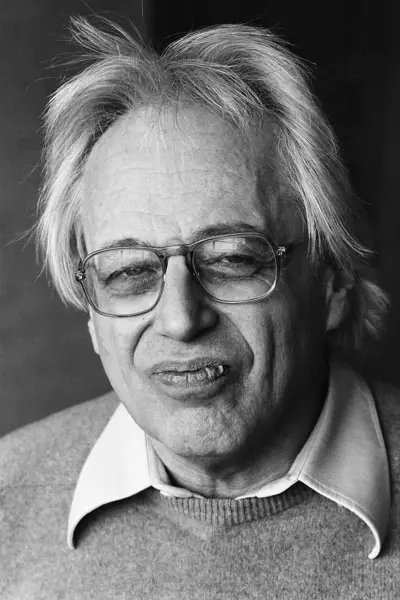
György Sándor Ligeti was a Hungarian-Austrian composer of contemporary classical music. He has been described as "one of the most important avant-garde composers in the latter half of the twentieth century" and "one of the most innovative and influential among progressive figures of his time".
