Mahatma Gandhi Quotes
I think it is the height of ignorance to believe that the sexual act is an independent function necessary like sleeping or eating. Seeing, therefore, that I did not desire more children, I began to strive after self-control. There was endless difficulty in the task.
Gandhi, Mahatma. An Autobiography: The Story of My Experiments with Truth. Translated by Mahadev Desai, Navajivan Publishing House, 1927.


Many religious fundamentalists saw condom advocacy as basically immoral as people, in their religious view, ought not to be having sex outside of marriage. A number of programs were started where young people were encouraged (and some say pressured) to take vows of abstinence. Instead of just advocating the abstinence programs, some conservatives chose to attack condom programs by publicly telling people that condoms can break and have a failure rate of over 10 percent. Elders and others who did not think abstinence only programs sufficient, then were able to use the evidence which showed that very few condoms failed and comparatively many vows of chastity and abstinence fail much more frequently. Abstinence was always preferable if it worked and because of the polarization of American Society it was very difficult to develop programs which strongly advocated abstinence and also taught condom use in case a particular young person could not avoid a situation where they became sexually active. The 10 percent failure rate is a very misleading statistic. A couple who is sexually active—intercourse once a week—who use a condom always and properly will have about a 2 percent failure rate in an entire year of sex. That is less than 1 25th of one percent chance of failure per act of intercourse. Couples who do not use condoms always and properly will have a 10 percent or more failure rate but that is for the entire year. Per act of intercourse, the failure rate can be as high as one fourth of one percent—and not the one out of 10 chance of failure that condom opponents sometimes state or imply. The important fact is that there is always a chance of failure with a condom but it is relatively small and far smaller than the failure rate of teen agers who take a vow of abstinence. Abstinence, however, is the only perfect way to prevent pregnancy.

In 1877 Annie Besant and Charles Bradlaugh attempted to publish The Fruits of Philosophy in Britain. It was a book on Birth Control. The two were immediately arrested and charged with publishing an ‘obscene’ book. Gifford was the Public Prosecutor. The authors were convicted and sentenced to 6 months in prison. However, they appealed and were exonerated in the appeal. The case was good for Gifford who went on to become Lord Chancellor of Britain. The trial was a strong motivator for Annie Besant to have a very activist career thereafter.
A Woman’s Concern like many other anti-abortion groups are also morally opposed to birth control of all kinds except celibacy or the “rhythm method” which is not particularly effective. He was appointed by the George W. Bush administration after vigorous lobbying by some of the extreme right wing religious groups who wanted birth control such as pills, IUDs or condoms to be made illegal. These proposals did not get much public support as the vast majority of Americans including a majority of Catholics use birth control methods that this man would have criminalized. His claims about the negative effects of birth control had no scientific bases whatsoever. As a physician, he had been warned by the Medical Association for the improper practice of medicine. He had to resign his government position.


Kenyans were dying in droves from AIDS and the abstinence programs had not stemmed the spread of AIDS.


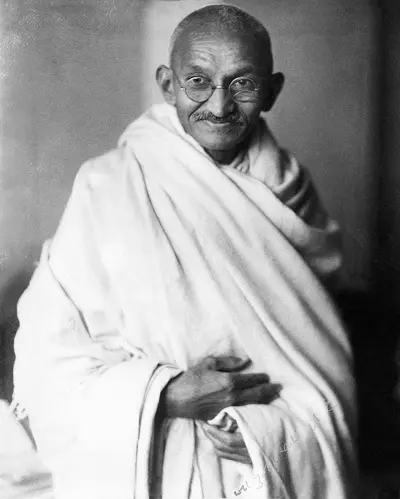
Mohandas Karamchand Gandhi was an Indian lawyer, anti-colonial nationalist, and political ethicist, who employed nonviolent resistance to lead the successful campaign for India's independence from British rule, and in turn inspired movements for civil rights and freedom across the world. The honorific Mahātmā (Sanskrit: "great-souled", "venerable"), first applied to him in 1914 in South Africa, is now used throughout the world.
