William Butler Yeats Quotes
I say that Roger Casement
Did what he had to do,
He died upon the gallows
But that is nothing new.
Yeats, W. B. "Roger Casement." New Poems, Cuala Press, 1938, p. 16.


He was never shot by the people, but executed after a military coup.


Joseph Addison had earlier written of such a situation. Recent research has strongly suggested that Hale may never have said these words. The American patriots wanted to have heroes and may not have been too worried about the documentation and historical research. See {621112}


Song traditionally sung at the end of British Labour Party meetings


Description of the Marshals arresting her. She was charged with interfering with the Draft during WWI. She wrote and gave speeches against the war and was convicted according to the laws and court interpretations of the time.


While Mangin was disgustingly racist, many native soldiers from Senegal, Morocco and other French colonies were pleased that Mangin was not only advocating that they serve with the French Army, but the General was critical of the fighting spirt of the then contemporary Frenchmen and claimed that the “prmitives” would invigorate the French Army. Mangin’s view was adopted as policy and in the First World War, native colonial troops were an important component of the victorious French Army.

President Abraham Lincoln followed this speech with his Gettysburg Address.


She was in deep trouble for her writings. She had earlier tried to stave off a revolution by getting the King, the nobility, the clergy and the politicians to compromise, and she predicted the sad outcome if they did not. During the Reign of Terror she spoke out against the vengeance killing that was so prevalent and alienated herself to many of the fanatics. She realized that she could be arrested any day. Yet she wrote this document which the extremists found even more incriminating. She was arrested a few weeks later, tried and executed. As she predicted, France and the historical scholarly world remembered her accurate predictions and warnings, and her “civic virtue”. Check out her other quotations in this collection.
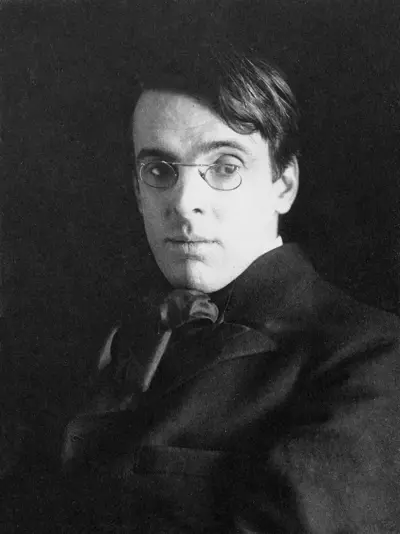
William Butler Yeats was an Irish poet, dramatist, prose writer and one of the foremost figures of 20th-century literature. A pillar of the Irish literary establishment, he helped to found the Abbey Theatre, and in his later years served two terms as a Senator of the Irish Free State. He was a driving force behind the Irish Literary Revival along with Lady Gregory, Edward Martyn and others.
