Park Chung-hee Quotes
I have repeatedly emphasized that the Communists in North Korea appear to have set 1975 as the year of aggression against the South.


The first has already occurred; the second is still an open question.

After the Second World War Japanese industry had mostly not yet been rebuilt from the destruction of the allied bombing. The automobile industry, which before the war had aspirations of worldwide competition had been reduced to one company making less than 1000 cars a year and not many more trucks. However, when the Korean War broke out, there was a need for many military vehicles to support the allied war effort. Japan being so close and having very low labor rates had the opportunity to supply many of the needed vehicles. This allowed Nissan, Toyota and Datsun to get on their industrial feet, and from there to become world leaders. Hence, for Japan, the war was a gift from the Gods.


The German reunification cost the West German citizens $1.9 Trillion over 20 years. East Germany was well behind West Germany in standard of living. However comparing South Korea—a very comfortable middle class society—with North Korea—an economic primitive basket case—produces a gap that is much wider, For example, East German infrastructure was not as well developed as West German infrastructure. North Korea has virtually no real infrastructure except a military one.


See Charles de Gaulle {138034} on the ephemeral nature of treaties.
The Korean War armistice left a vulnerable border between North and South Korea and approximately 40,000 American troops were necessary for decades thereafter to protect the border.

This intelligence analysis turned out to predict exactly what happened. Less than 3 years after this report, the Communists overran South Korea and the Korean War began. See {584008} for another remarkable foreign policy prediction.


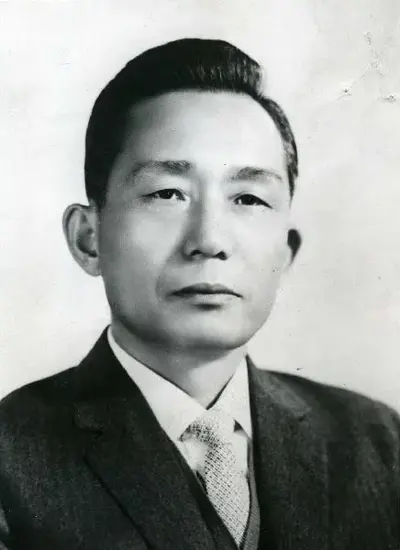
Park Chung-hee was a South Korean politician and army general who served as the President of South Korea from 1963 until his assassination in 1979, assuming that office after first ruling the country as head of a military dictatorship installed by the May 16 military coup d'état in 1961. Before his presidency, he was the chairman of the Supreme Council for National Reconstruction from 1961 to 1963 after a career as a military leader in the South Korean army.
