Roger Williams Quotes
I have read ... the last will and testament of the Lord Jesus over many times, and yet I cannot find by one title of that testament that if He had been pleased to have accepted of a temporal crown and government that ever He would have put forth the least finger of temporal or civil power in the matters of His spiritual affairs and Kingdom. Hence must it lamentably be against the testimony of Christ Jesus for the civil state to impose upon the souls of the people a religion, a worship, a ministry, oaths (in religious and civil affairs), tithes, times, days, marryings, and buryings in holy ground...
Roger Williams, c. 1603-1683, Clergyman and founder of Rhode Island, The Hireling Ministry, None of Christ's, 1652
Sourced by: Eigen's Political and Historical Quotations


At the beginning of our nation, before there was a Constitution, the state of Virginia prohibited clergy from serving in the state legislature.

This is the first American ordinance of freedom of conscience. Note that it only provided freedom of religion for Christians. However, that was an important first step as different sects of Christianity had been persecuting each other whenever the opportunity arose.

The wording was rejected and the delegates insisted upon the original proposed language: “Well aware that Almighty God hath created the mind free …” This is a very important historical quotation because it shows that Henry and a few others wanted to make the society Christian centric, However, the majority insisted that it be non-sectarian. Many of the delegates rejecting the “Jesus Christ” language were themselves practicing Christians, but they were aware of the terrible religious wars and strife in Europe and between Christians and Muslims as well as the persecution of Jews, Quakers, and other sects; they did not want that in America so they rejected the idea of an established Christian Church or culture.


His positions presaged some of those of Protestants in the Reformation. In the great struggle of the time between the Pope and the Emperor, Marsilius was the leading advocate for the emperor’s superiority of authority. The Pope wrote a condemnation of these ideas.


Judge Moore was trying to justify oaths to God or other state references to a Judeo-Christian God as not violating the 1st Amendment stricture about the government endorsing a particular religion. Note however his {33827} quotation.


This proposal and others like it over the years have never even gotten out of Committee.

Backus was the first of the American clerics to espouse the position that in order for there to be a Christian nation, the state must be separate from the Church.
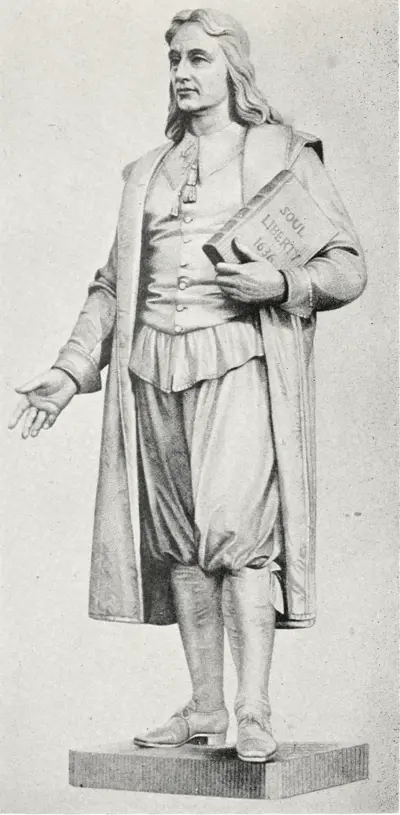
Roger Williams was a Puritan minister, theologian, and author who founded Providence Plantations, which became the Colony of Rhode Island and later the U.S. state of Rhode Island. He was a staunch advocate for religious freedom, separation of church and state, and fair dealings with Native Americans.
