Robert E. Lee Quotes
I have been up to see the [Confederate] Congress, and they do not seem to be able to do anything except to eat peanuts and chew tobacco, while my army is starving.
Robert E. Lee, 1807-1870, Confederate General-in-Chief, Remark to his son, George Washington Custis Lee, March 1865
Sourced by: Eigen's Political and Historical Quotations


That is the way he was killed. The phrase, “We are bound to believe that, anyhow” indicates that Stuart really realized how futile the Southern war effort would be but loyalty and patriotism required him to suspend his rational belief structure.

Eggleston was an accomplished writer who had served in the Confederate army of the Civil War. 20 year after the war he wrote a series of articles for the prestigious Northern Atlantic Monthly trying to convey the war from the Southerner’s point of view.


Although escaped slaves could not fight for the North, they could be very useful on road building and other military engineering projects needing labor. Every time a slave escaped, it diminished the military engineering labor of the Confederates by one but added to that of the Union. Pinkerton and others however engaged many escaped slaves who volunteered for an incredibly dangerous mission. They returned back to the Southern lines into the slave work gangs, and organized slave escapes of groups of Blacks. In addition, many of them, by observing and overhearing the Confederate soldiers gained information regarding supply and troop levels and movements, and this they brought back to the Union officers. Those that were caught were executed as spies. Escaped slaves were espionage and covert operations agents before they were allowed to be soldiers.

General Grant had just accepted the “Unconditional Surrender” of the 15,000 Confederate troops and 48 large cannon. Yet the South described the battle as a “standoff” and a “draw”. This quotation is very significant because it illustrates two very important dynamics of the Confederacy. First that the Southerners consistently lied to themselves and to each other about their situation in the war. Whether this was the elite manipulating the mass of the people or large scale self-delusion by most has been debated since. Second, Chesnut’s statement illustrates that it was common knowledge that the reports about the war were false and exaggerated for the Confederate side and just part of the extensive propaganda campaign of the Confederacy.

McClellan liked to parade and drill his troops but not fight them. Lincoln wanted him to take the offensive but the general always found an excuse not to. Many historians believe that McClellan wanted the war to end, the South to rejoin the Union and be allowed to maintain slavery. Others feel that he was just a military man who maintained his popularity by minimizing casualties. Finally, Lincoln fired McLellan and the complexion of the war changed thereafter. McClellan ran against Lincoln for the Presidency in 1864. See {633923}


Lincoln and the Union leaders were still hopeful of ending the rebellion and getting things back to a pre-war footing economically. At this point they were trying to preserve components of the Southern Economy at no small cost. As that hope was shown to be futile, the Total War strategy of Grant and Sherman prevailed to the satisfaction of men like Opdycke. That actually ended the war quickly, but the Southern Economy was devastated in the process.

He was Chancellor of the Exchequer at the time of this speech. Gladstone was certain about most of his views on foreign policy but correct on only some with many blunders on his watch. This view was very important for the Confederacy as it was a prerequisite to diplomatic recognition. The latter never came.
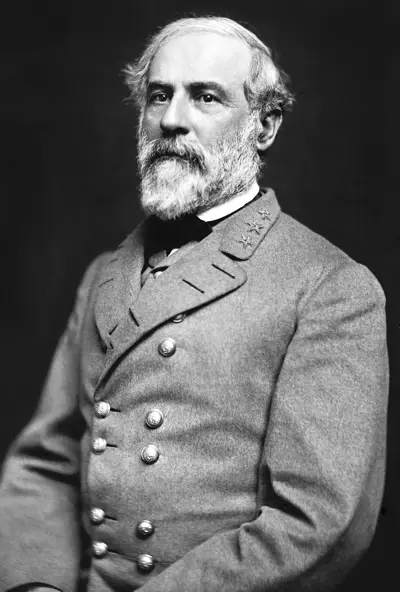
Robert Edward Lee was an American Confederate general best known as a commander of the Confederate States Army during the American Civil War. He led the Army of Northern Virginia from 1862 until its surrender in 1865 and earned a reputation as a skilled tactician.
